


California Dreaming
Jeffrey Alan Marks’ Guide to Coastal Living
A meeting of West Coast ease and English tradition, shaped by memory, family and the belief that a home should grow more personal with time.
Californian coastal style is often associated with light filled rooms, natural materials and an easy connection to the outdoors. In the hands of Jeffrey Alan Marks, however, it becomes something richer.
His interiors are polished without feeling precious and layered without becoming overly formal. Woven fibres, aged timber and relaxed upholstery sit alongside antiques, tailored silhouettes and strong architectural detailing. It is coastal living with substance, comfortable, expressive and designed for real life.
His interiors are polished without feeling precious and layered without becoming overly formal. Woven fibres, aged timber and relaxed upholstery sit alongside antiques, tailored silhouettes and strong architectural detailing. It is coastal living with substance, comfortable, expressive and designed for real life.


From England to California
Although deeply connected to Southern California, Marks began his design education at London’s Inchbald School of Design, where his appreciation for architecture, history and the layered character of English interiors took shape.
His education extended beyond the classroom. Weekdays were spent absorbing London’s streets and buildings, while weekends brought visits to Paris and Milan. Through the school, Marks encountered influential British tastemakers including David Hicks, Nicky Haslam and John Stefanidis. He was drawn to rooms that appeared to have evolved naturally across generations rather than being completed in a single moment.
From the English tradition, he learned that unlikely elements could coexist: something restrained beside something glamorous, something inherited beside something new. When he returned to California and established his career along the coast, from La Jolla to Hollywood and Santa Monica, he carried that appreciation for history and permanence with him.
His distinctive style grew from the conversation between these influences, balancing the brightness and optimism of California with the depth, wit and architectural confidence of British design.
His education extended beyond the classroom. Weekdays were spent absorbing London’s streets and buildings, while weekends brought visits to Paris and Milan. Through the school, Marks encountered influential British tastemakers including David Hicks, Nicky Haslam and John Stefanidis. He was drawn to rooms that appeared to have evolved naturally across generations rather than being completed in a single moment.
From the English tradition, he learned that unlikely elements could coexist: something restrained beside something glamorous, something inherited beside something new. When he returned to California and established his career along the coast, from La Jolla to Hollywood and Santa Monica, he carried that appreciation for history and permanence with him.
His distinctive style grew from the conversation between these influences, balancing the brightness and optimism of California with the depth, wit and architectural confidence of British design.


The relaxed spirit of Southern California
Southern California brings lightness to Marks’ interiors. Abundant sunshine, a connection between indoors and outdoors and an informal rhythm of living encourage spaces that feel open, optimistic and never too serious. The architecture may be refined, but the atmosphere remains casual enough for bare feet, open doors and days spent moving between the house, garden and water.
White oak flooring, wide plank timber and simple woven rugs provide a natural foundation. Comfortable furniture and durable finishes allow each room to be genuinely used. Rather than relying on crisp blue and white, Marks takes his cues from the changing coastal landscape through watery greens, softened blues, warm neutrals and occasional jolts of colour.
He also works with the character already present in a building. Original floorboards, exposed beams and enduring architectural details are retained where possible, then given renewed energy through paint, wallpaper, antiques and custom pieces. This considered layering allows a home to feel fresh without erasing its past.
White oak flooring, wide plank timber and simple woven rugs provide a natural foundation. Comfortable furniture and durable finishes allow each room to be genuinely used. Rather than relying on crisp blue and white, Marks takes his cues from the changing coastal landscape through watery greens, softened blues, warm neutrals and occasional jolts of colour.
He also works with the character already present in a building. Original floorboards, exposed beams and enduring architectural details are retained where possible, then given renewed energy through paint, wallpaper, antiques and custom pieces. This considered layering allows a home to feel fresh without erasing its past.

Coastal, without the cliché
Marks’ approach is informed by the sea but never confined by it.
Nautical references appear with a playful, personal quality rather than as an obvious decorating theme. A rope detail might replace a conventional balustrade, a brass fitting may recall the character of a ship or a vintage rowing boat might be suspended overhead.
These details sit comfortably beside antiques and objects gathered through travel, giving his coastal rooms a sense of discovery. Shifting colour, tactile materials, generous furniture and a close relationship with the landscape communicate coastal character through atmosphere. The sea provides inspiration, but it never becomes a formula.
Nautical references appear with a playful, personal quality rather than as an obvious decorating theme. A rope detail might replace a conventional balustrade, a brass fitting may recall the character of a ship or a vintage rowing boat might be suspended overhead.
These details sit comfortably beside antiques and objects gathered through travel, giving his coastal rooms a sense of discovery. Shifting colour, tactile materials, generous furniture and a close relationship with the landscape communicate coastal character through atmosphere. The sea provides inspiration, but it never becomes a formula.

Texture creates history
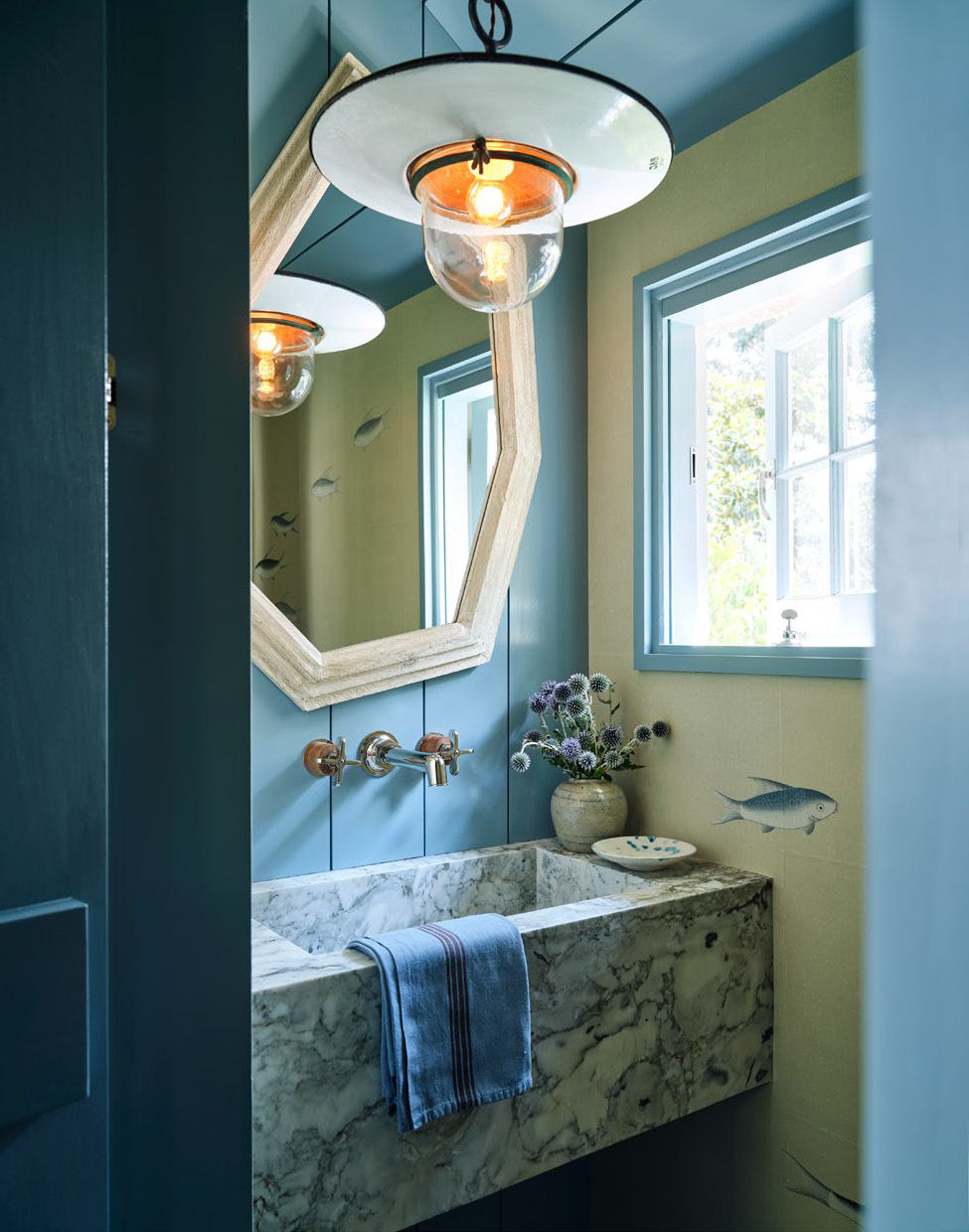
Texture is central to Marks’ work because it gives new or recently renovated spaces a sense of depth. Instead of allowing every surface to feel pristine, he introduces finishes that catch the light, reveal the hand behind them and soften the architecture.
Traditional brushwork gives painted walls subtle movement, while shiplap adds rhythm and warmth. Where timber panelling is not appropriate, grass cloth, linen wallcoverings and upholstered walls add visual weight. Rope, woven fibres and natural bristles contribute smaller tactile moments throughout an interior.
These treatments are not decorative additions applied at the end. They connect disparate rooms and allow a restrained palette to remain interesting. Variations in weave, grain and finish create richness without disturbing the calm that makes coastal homes so inviting.
Traditional brushwork gives painted walls subtle movement, while shiplap adds rhythm and warmth. Where timber panelling is not appropriate, grass cloth, linen wallcoverings and upholstered walls add visual weight. Rope, woven fibres and natural bristles contribute smaller tactile moments throughout an interior.
These treatments are not decorative additions applied at the end. They connect disparate rooms and allow a restrained palette to remain interesting. Variations in weave, grain and finish create richness without disturbing the calm that makes coastal homes so inviting.


It’s that mix of modern and more storied touches that will make an interior age well for generations to come.
A home designed around life
Behind Marks’ aesthetic is a deeply personal understanding of home. Early in his career, he became attuned to the smallest rituals of his clients’ lives, from where they kept a favourite coffee cup to how they preferred their towels folded. His own understanding of permanence developed as his family grew.
Marriage and the arrival of his daughter, James, changed the way he considered the role of a home. His residences in Montecito, East Hampton and later Greenwich became settings not simply for beautiful objects, but for childhood, family gatherings, changing routines and memories still to be made.
This perspective sits at the heart of his book This Is Home. The rooms that stay with us are not memorable solely because of dramatic wallpaper or a beautifully resolved kitchen. Their meaning comes from the people welcomed inside and the experiences shared there, from celebrations and evenings beside the fire to impromptu dinners around the kitchen island.
Marks’ work suggests that a home is never truly finished. It changes alongside its inhabitants, gathering objects, references and stories over time. Design establishes the setting; life gives it meaning.
Marriage and the arrival of his daughter, James, changed the way he considered the role of a home. His residences in Montecito, East Hampton and later Greenwich became settings not simply for beautiful objects, but for childhood, family gatherings, changing routines and memories still to be made.
This perspective sits at the heart of his book This Is Home. The rooms that stay with us are not memorable solely because of dramatic wallpaper or a beautifully resolved kitchen. Their meaning comes from the people welcomed inside and the experiences shared there, from celebrations and evenings beside the fire to impromptu dinners around the kitchen island.
Marks’ work suggests that a home is never truly finished. It changes alongside its inhabitants, gathering objects, references and stories over time. Design establishes the setting; life gives it meaning.

Tailored comfort
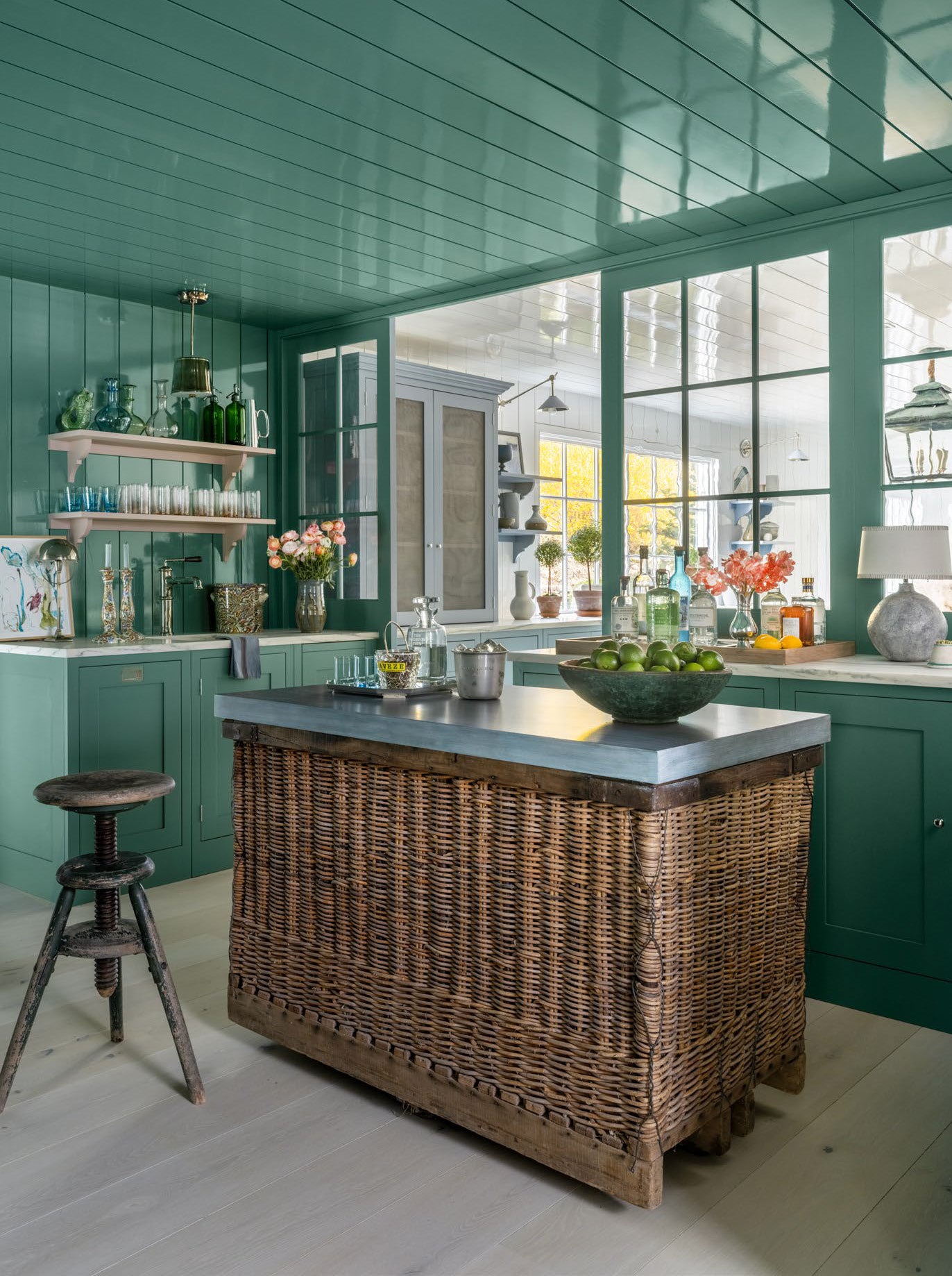
The same balance of beauty and livability can be seen in Marks’ collection for Palecek. Natural fibres and handwoven details are paired with clean, confident forms, translating his approach to coastal living into individual pieces.
The collection feels equally suited to a sunlit beach house, a relaxed city interior or a home far from the coast. Its appeal lies not in following a theme, but in creating a mood that is tactile, welcoming and quietly distinctive.
To bring this sensibility into your own home, begin with pieces that invite use. Layer contrasting natural materials, combine contemporary forms with objects that carry a history and reference the surrounding landscape through colour and craftsmanship. Most importantly, allow the interior to reflect the people who live there.
For Jeffrey Alan Marks, coastal living is not simply an aesthetic. It is a feeling of freedom and familiarity, a home connected to its surroundings, enriched by its past and ready for whatever comes next.
The collection feels equally suited to a sunlit beach house, a relaxed city interior or a home far from the coast. Its appeal lies not in following a theme, but in creating a mood that is tactile, welcoming and quietly distinctive.
To bring this sensibility into your own home, begin with pieces that invite use. Layer contrasting natural materials, combine contemporary forms with objects that carry a history and reference the surrounding landscape through colour and craftsmanship. Most importantly, allow the interior to reflect the people who live there.
For Jeffrey Alan Marks, coastal living is not simply an aesthetic. It is a feeling of freedom and familiarity, a home connected to its surroundings, enriched by its past and ready for whatever comes next.


