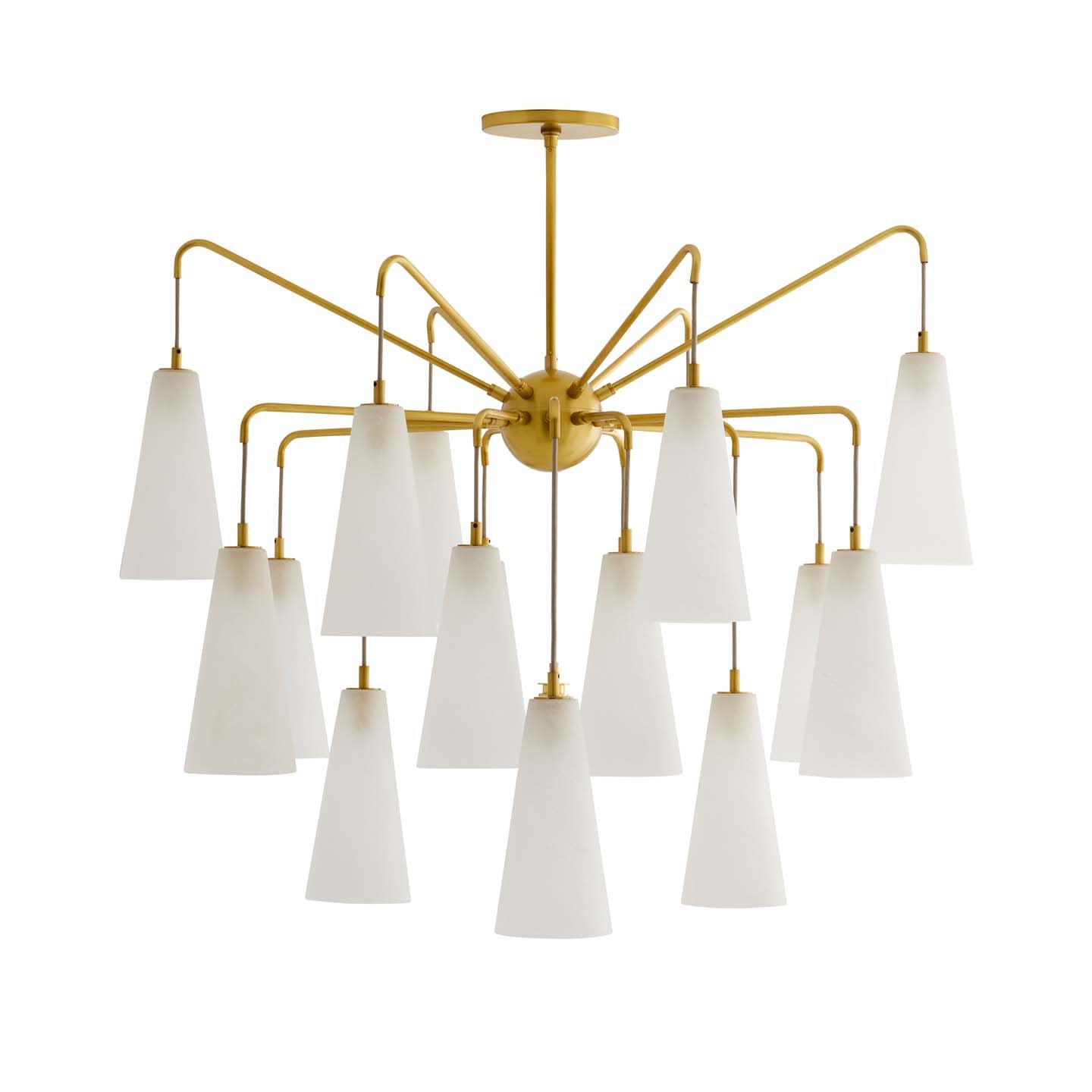
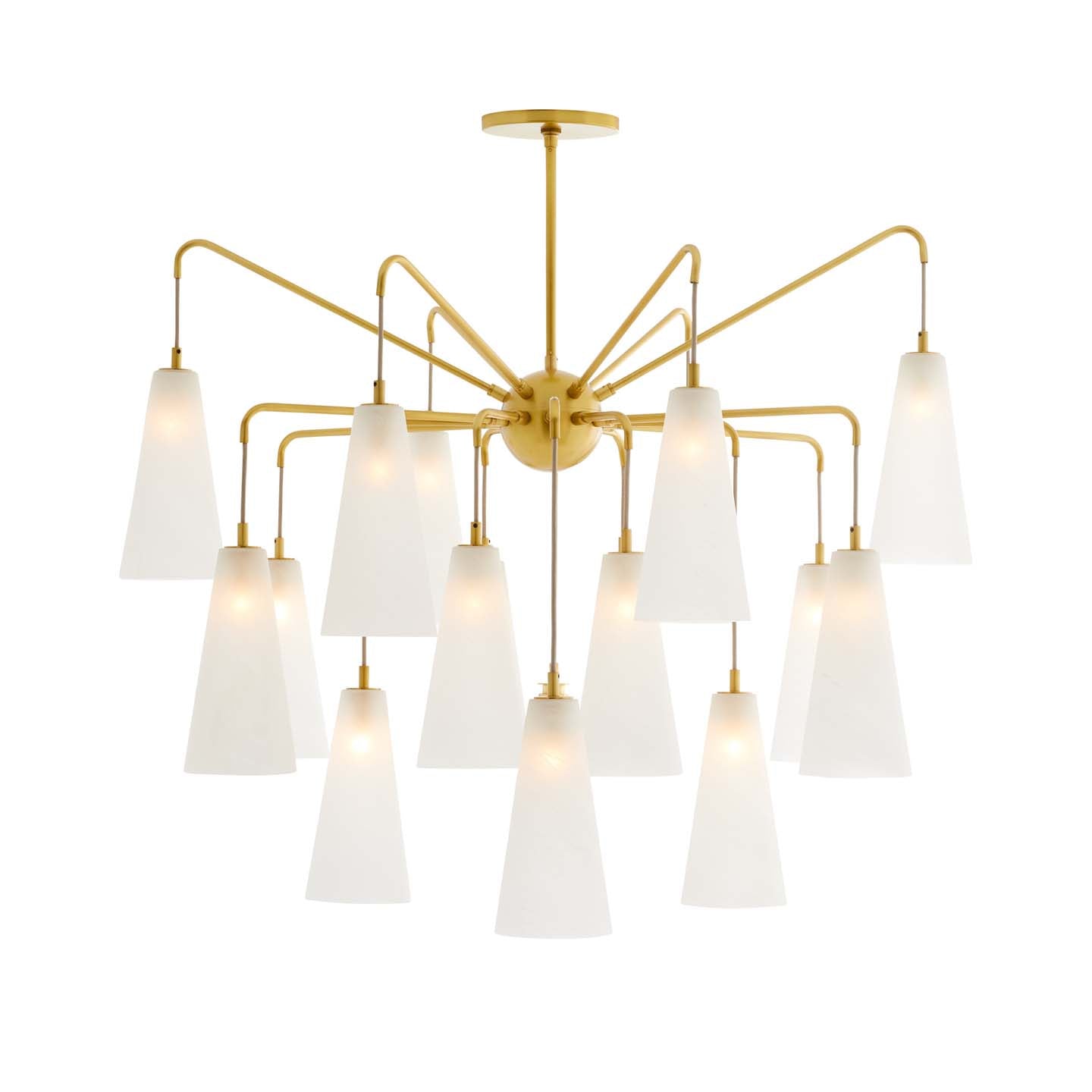
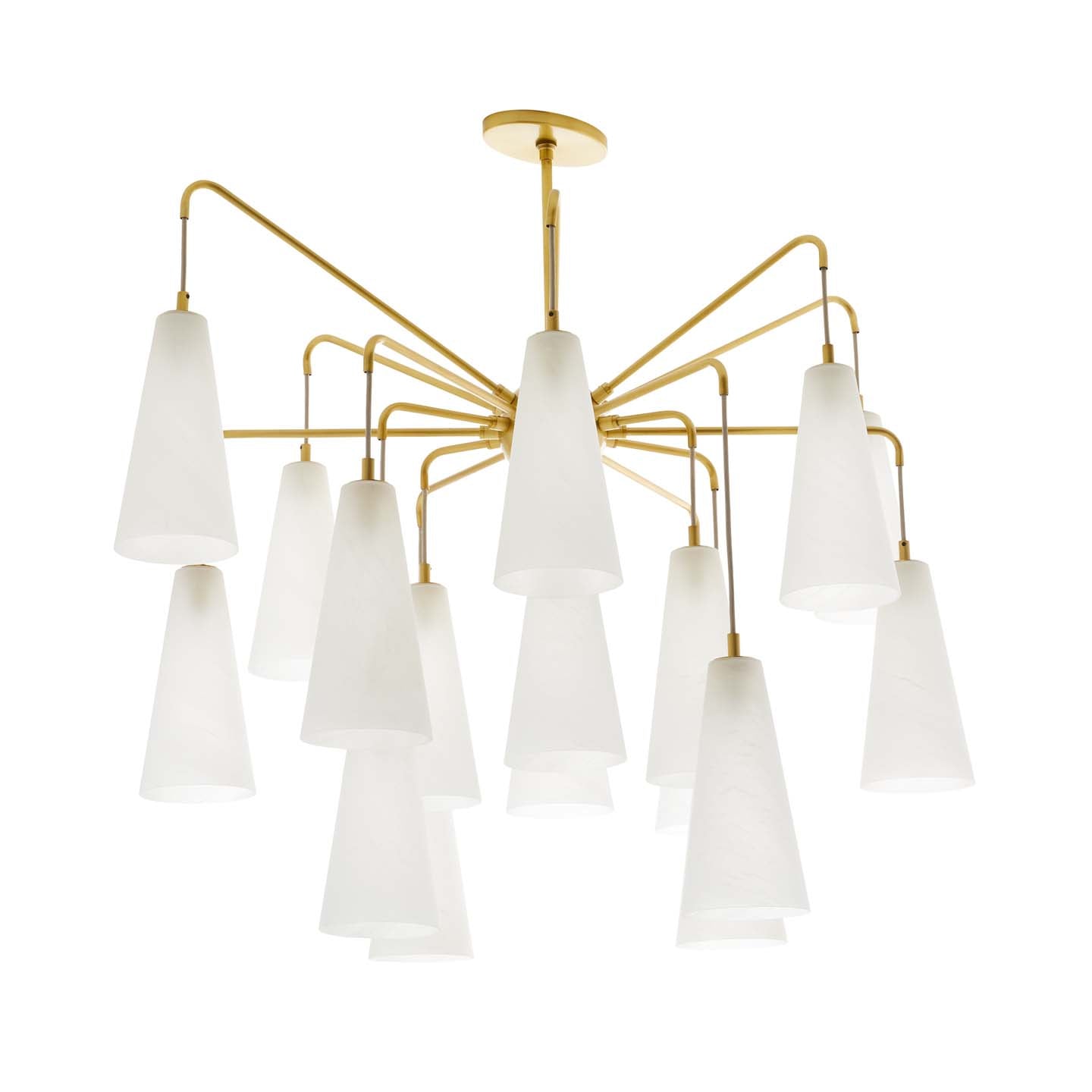
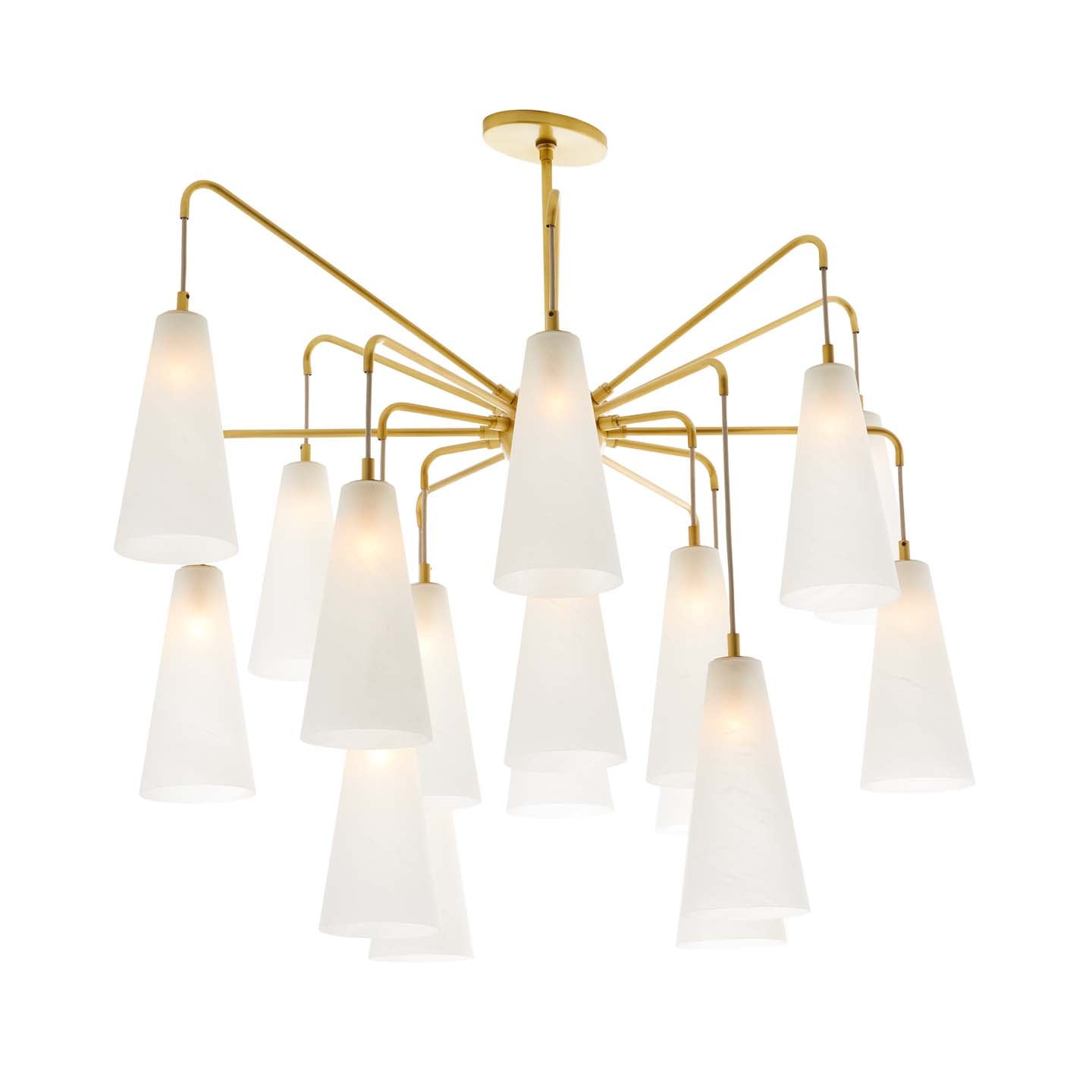
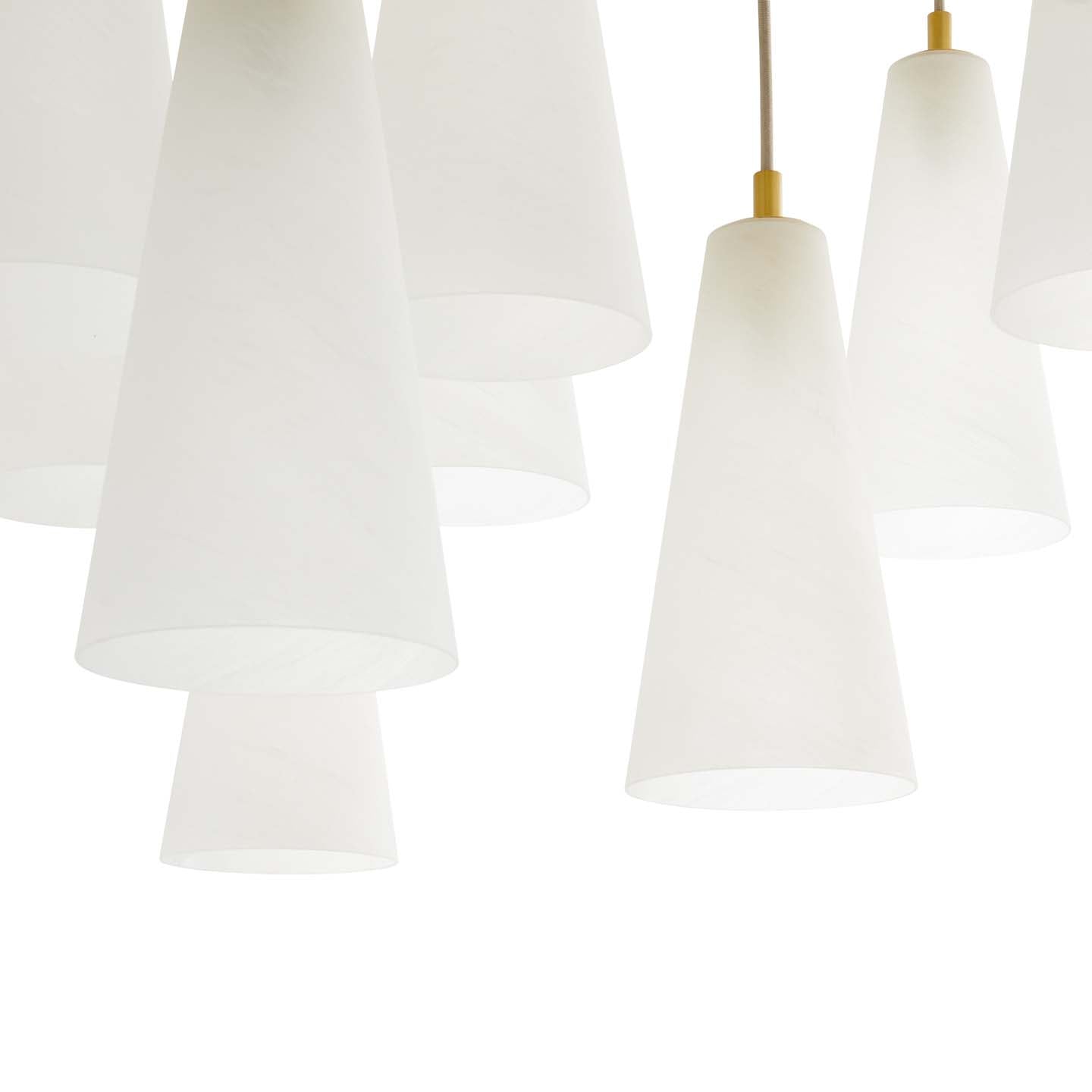
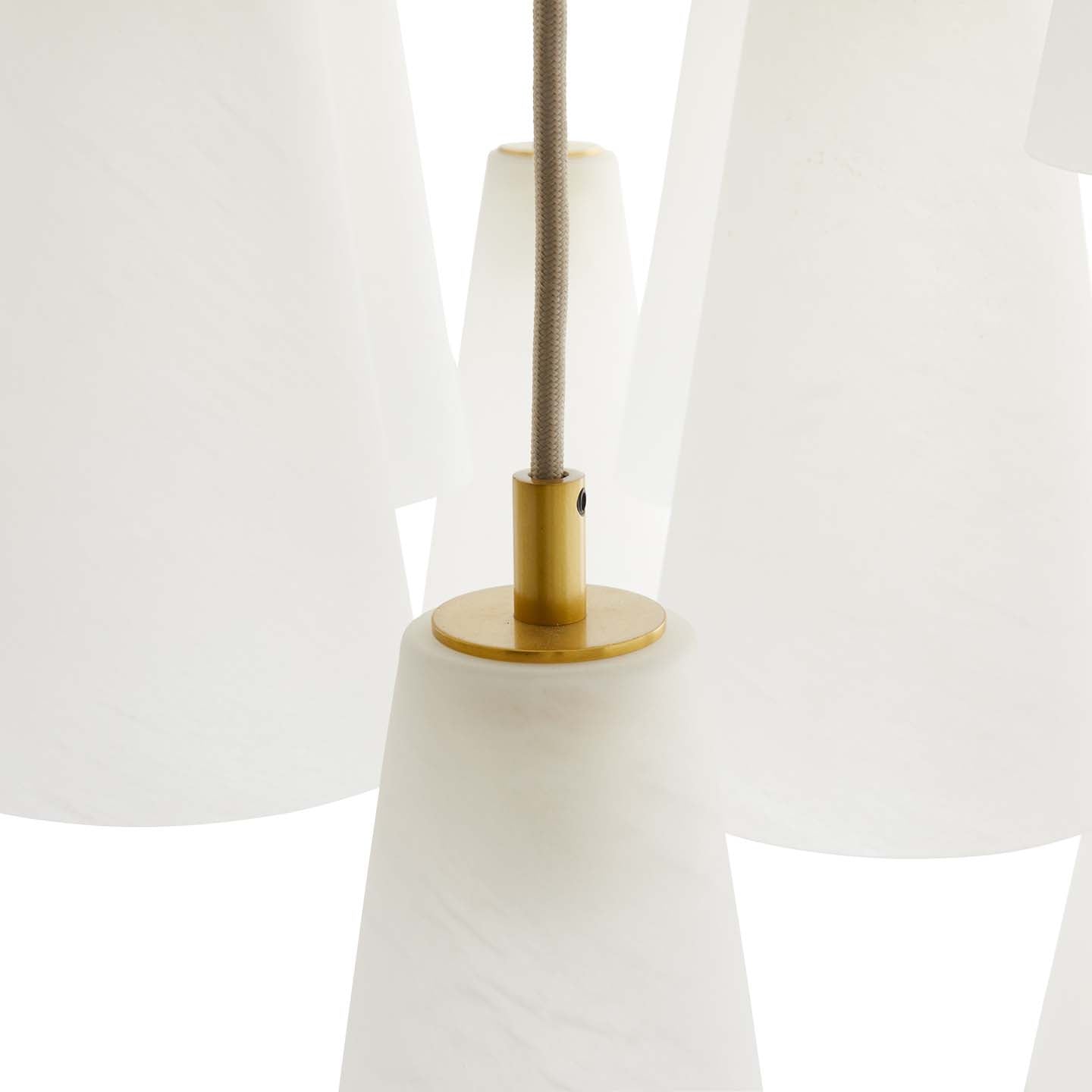
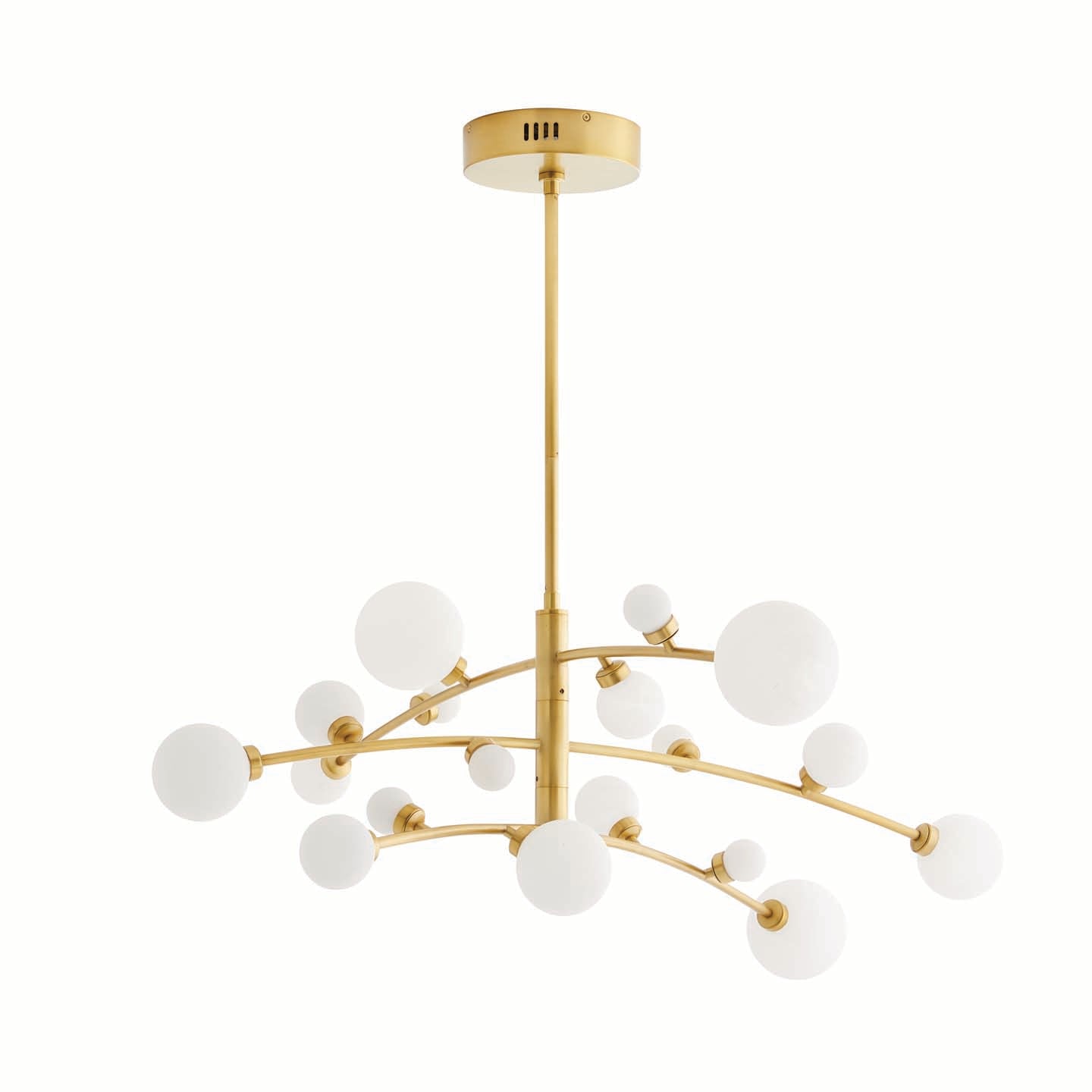
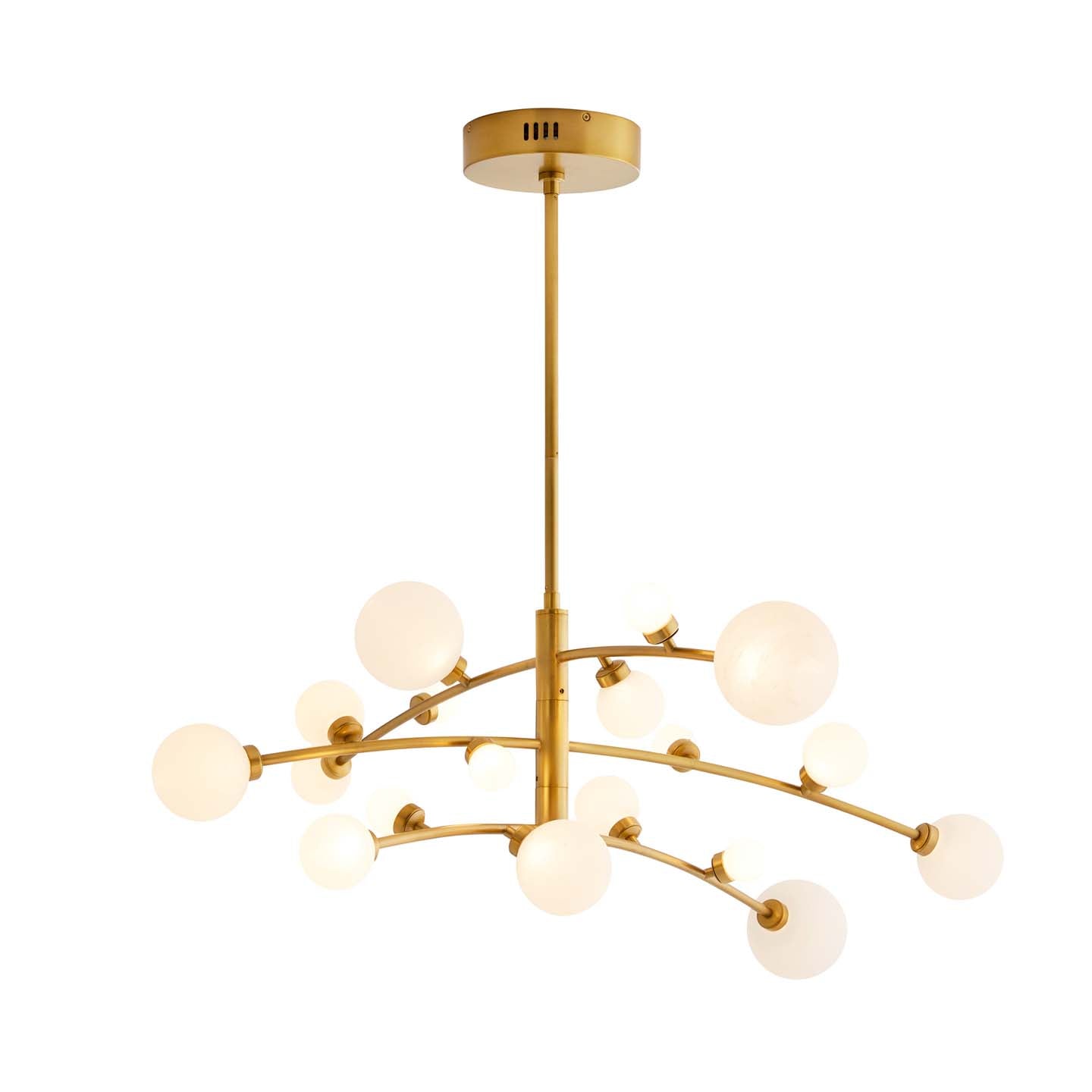
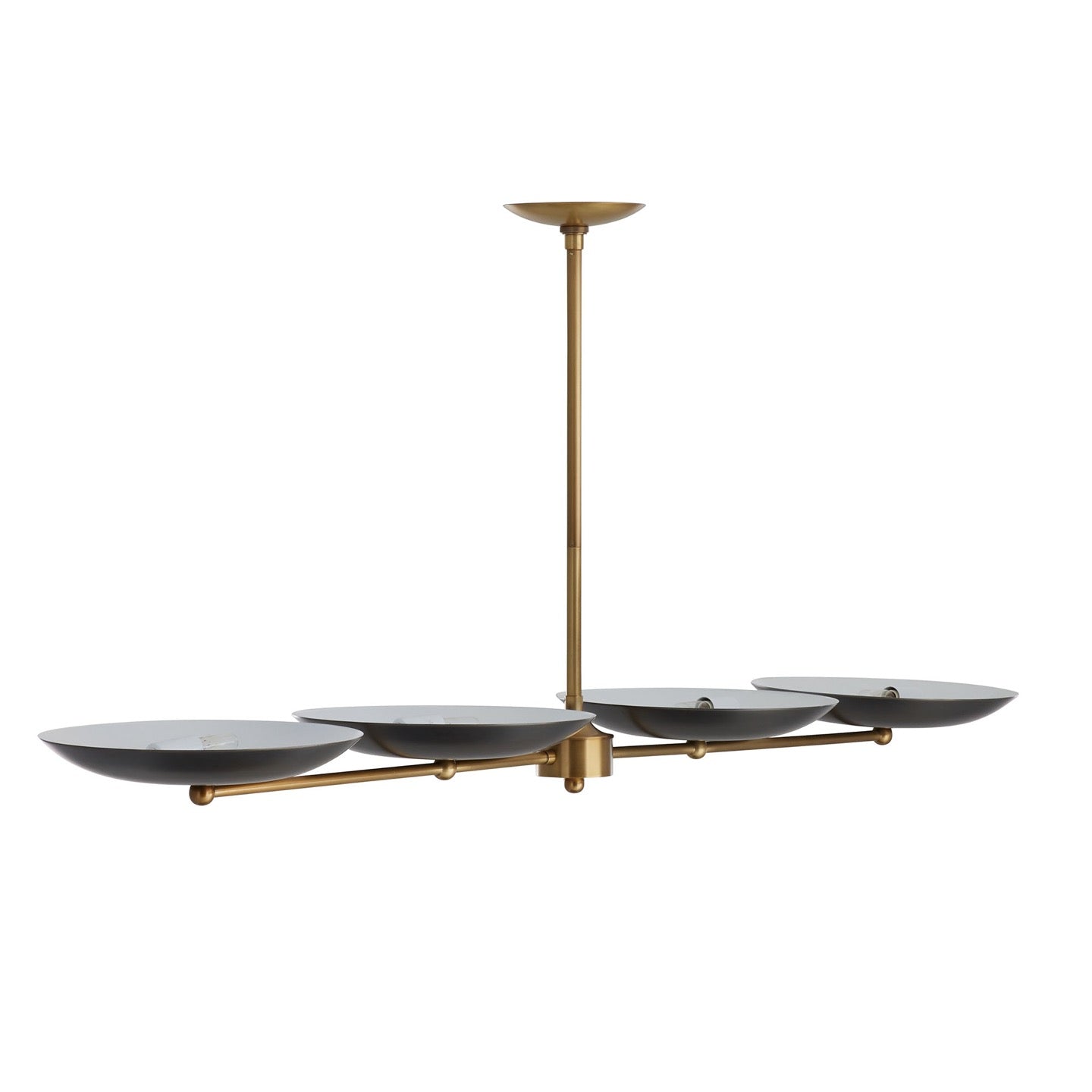
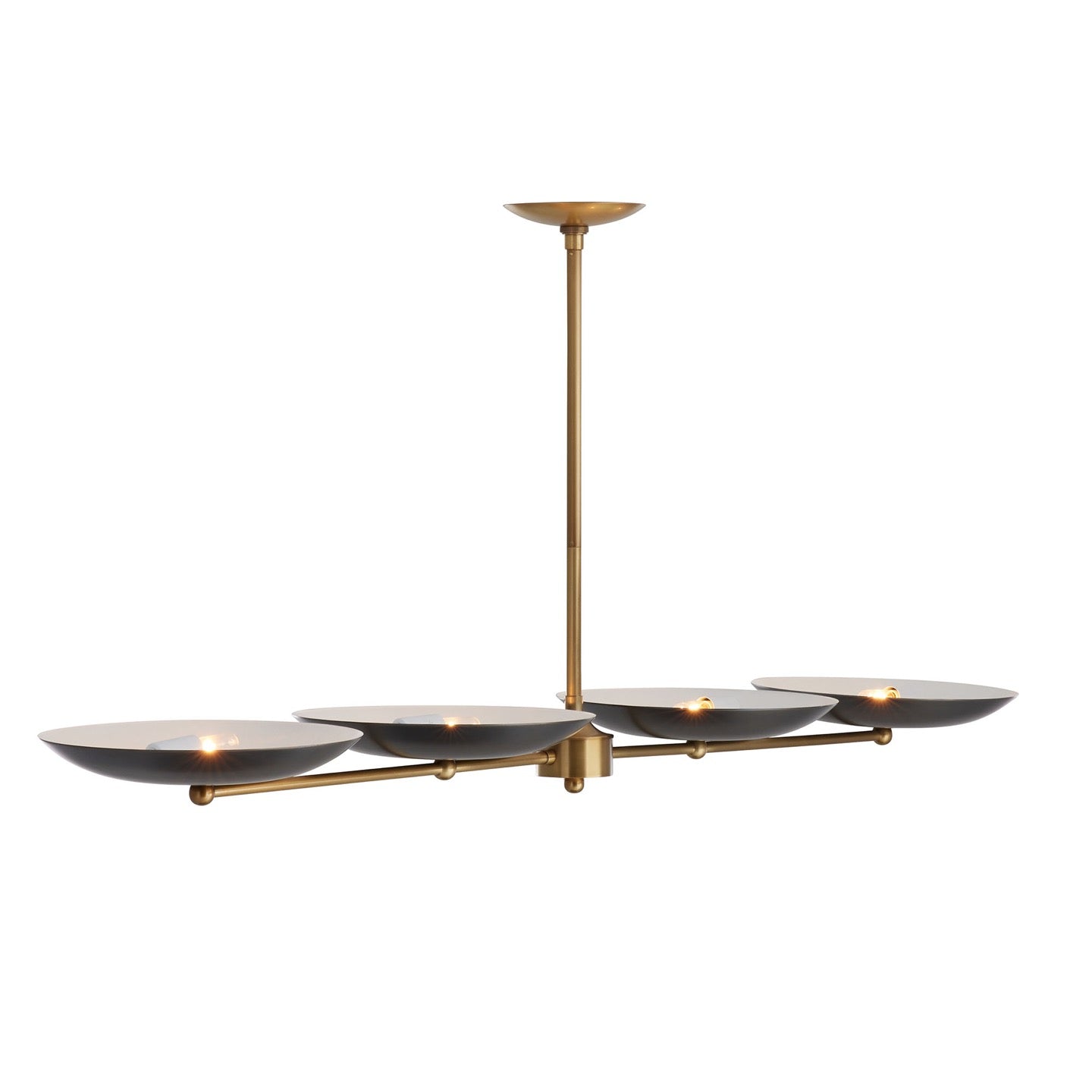
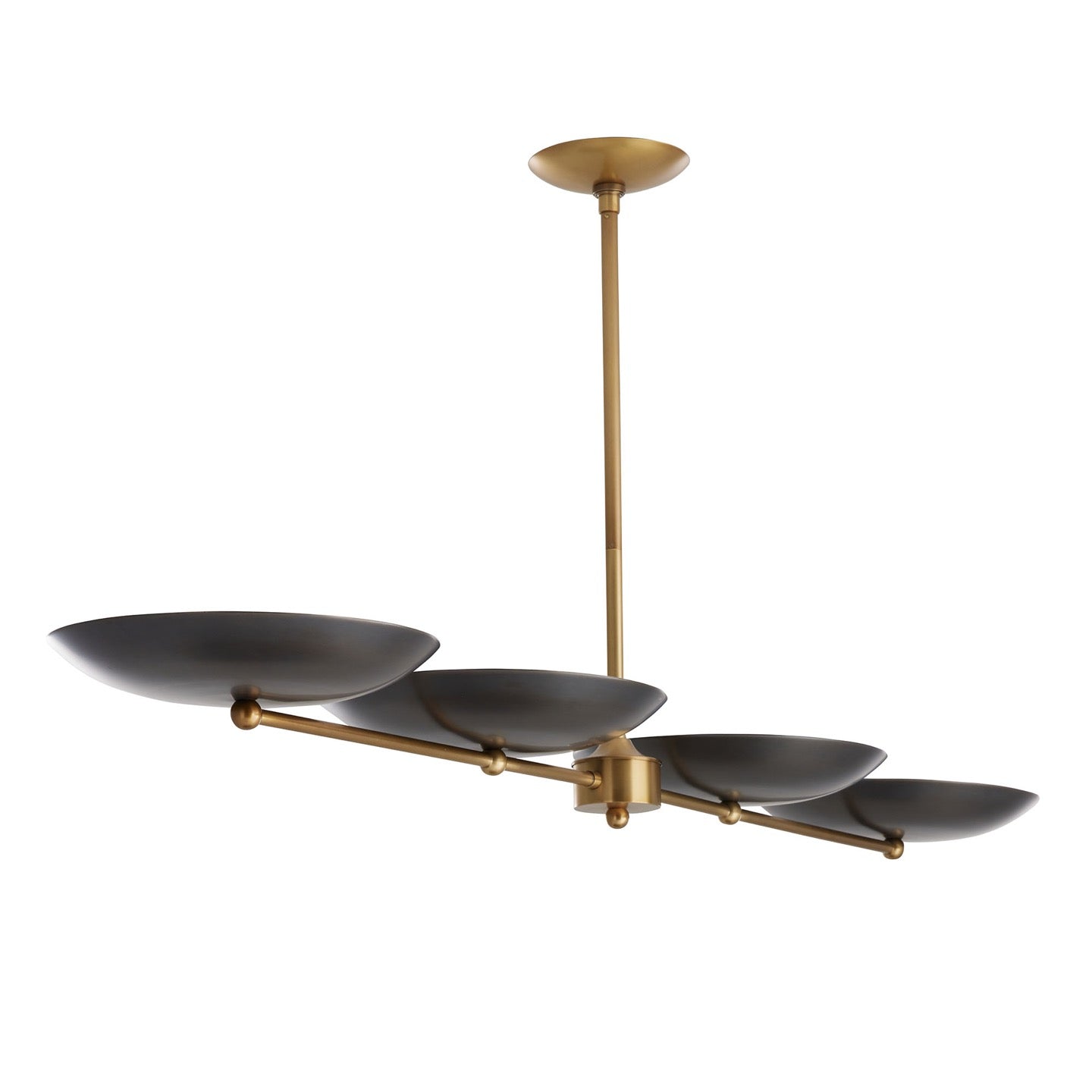
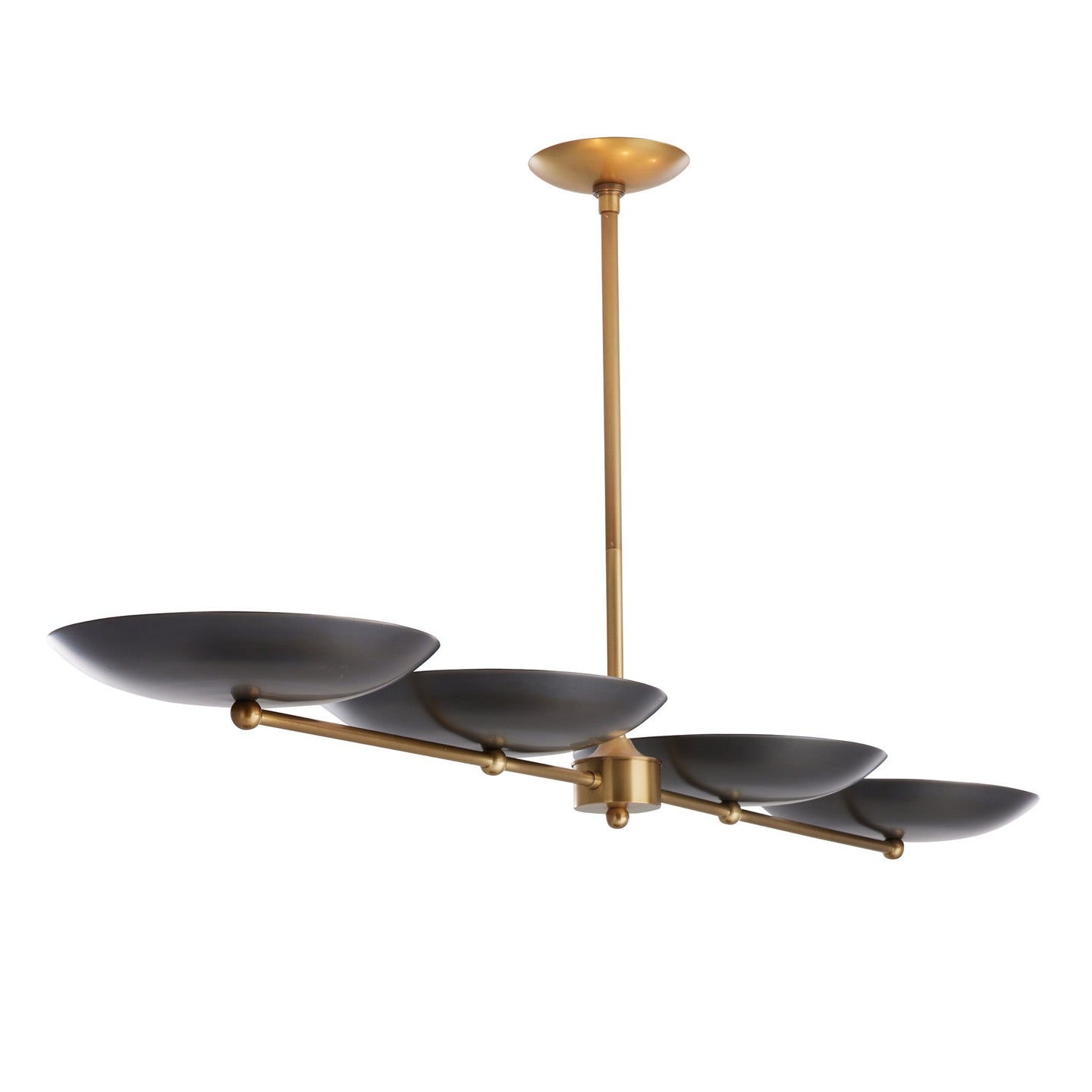
What to look for in chandeliers
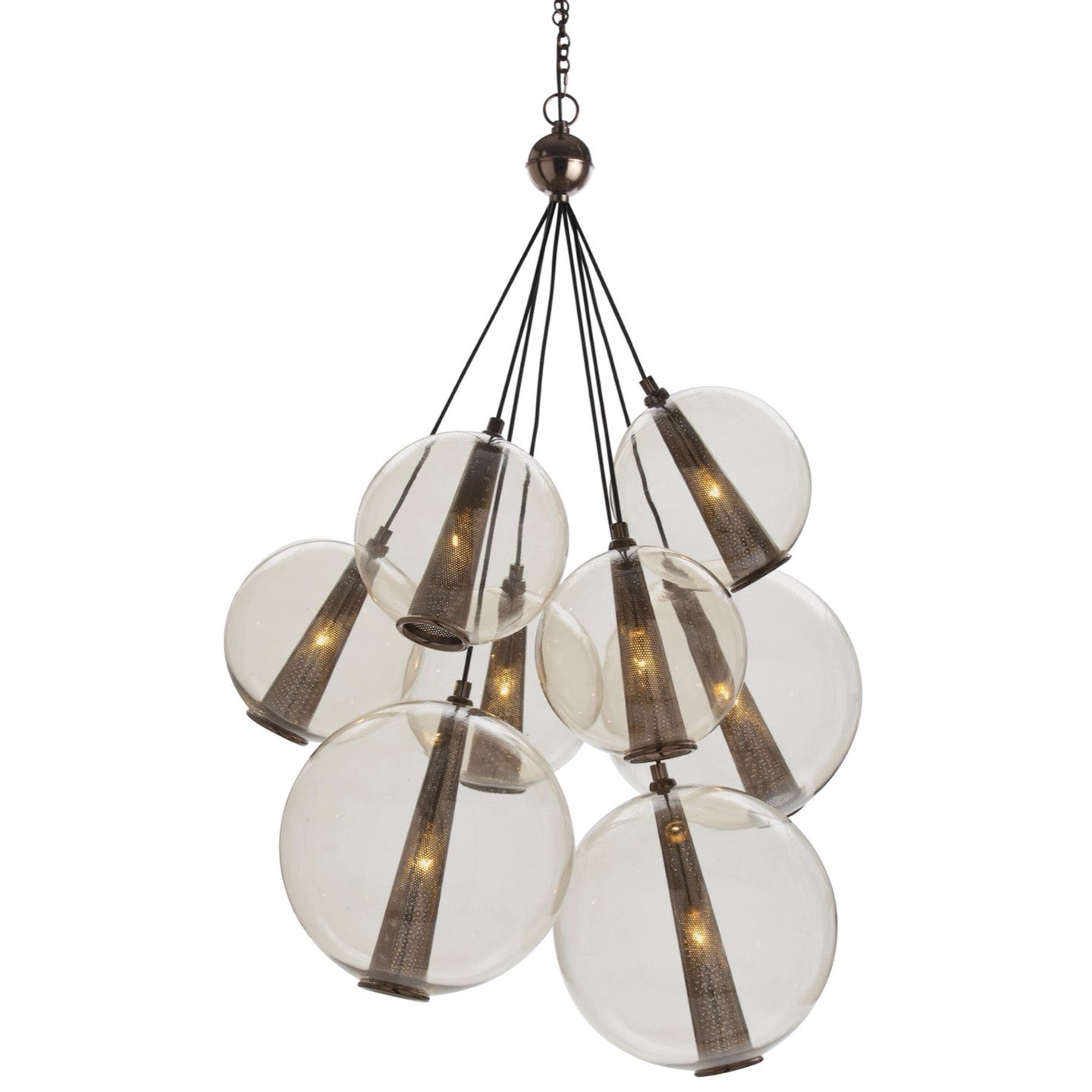
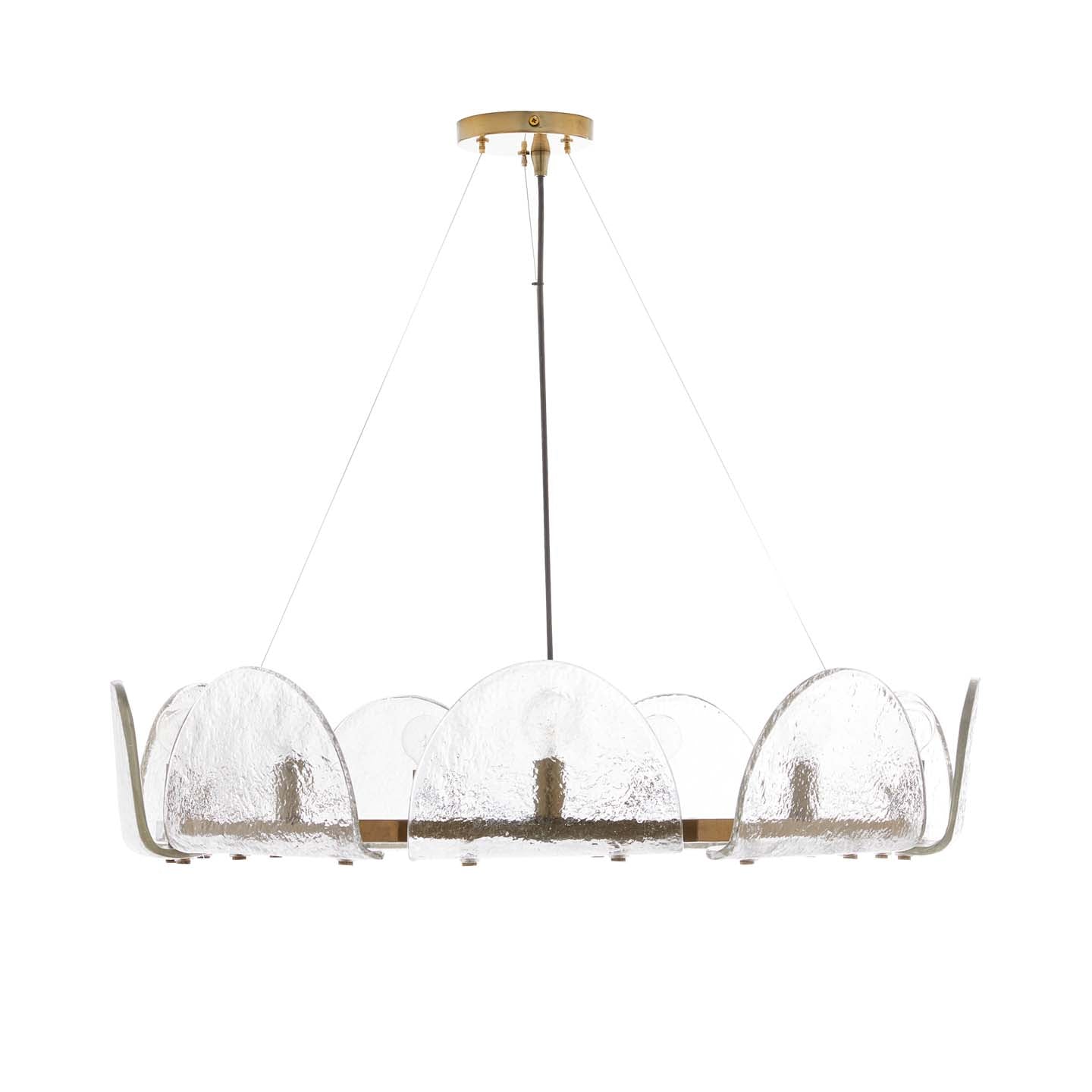
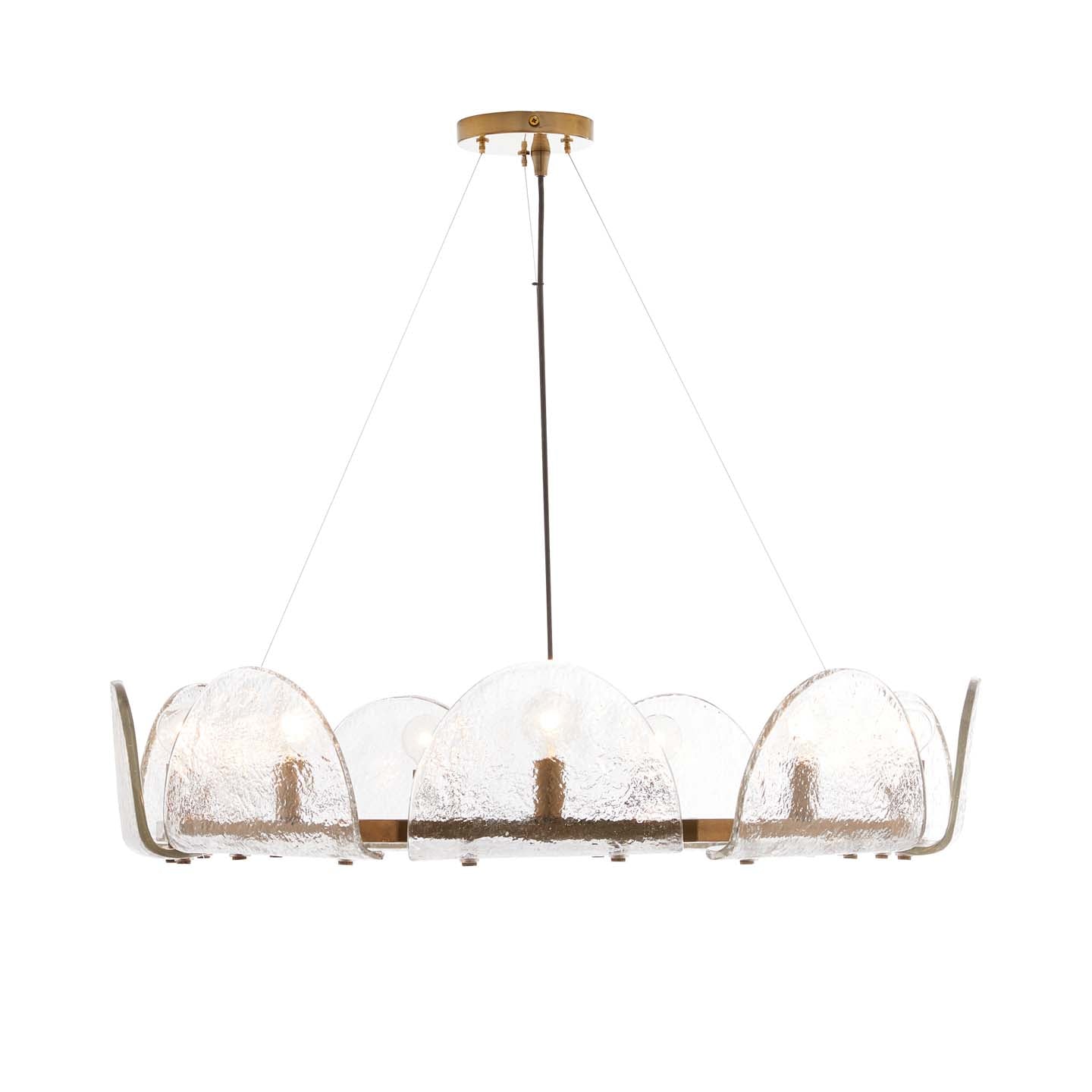
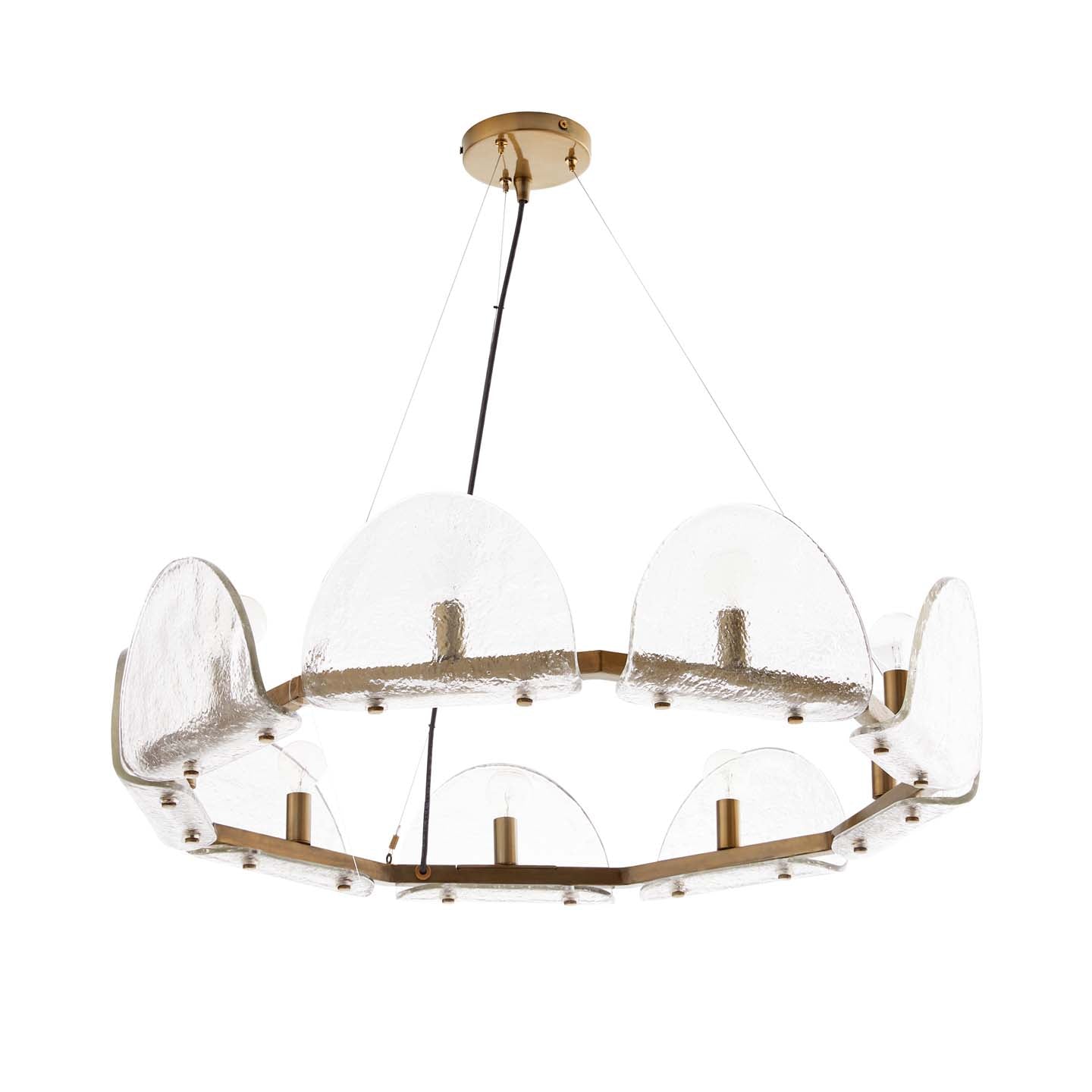
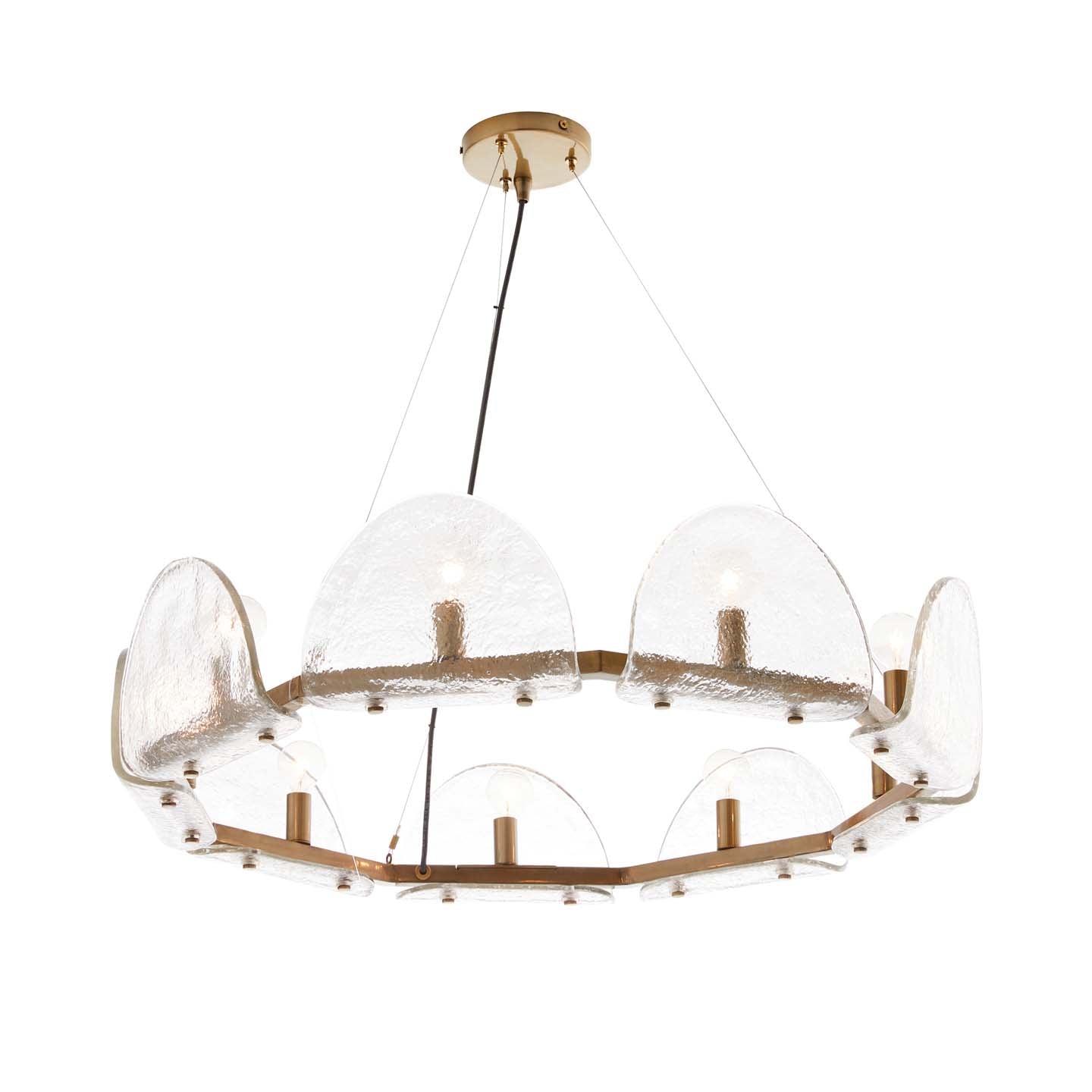
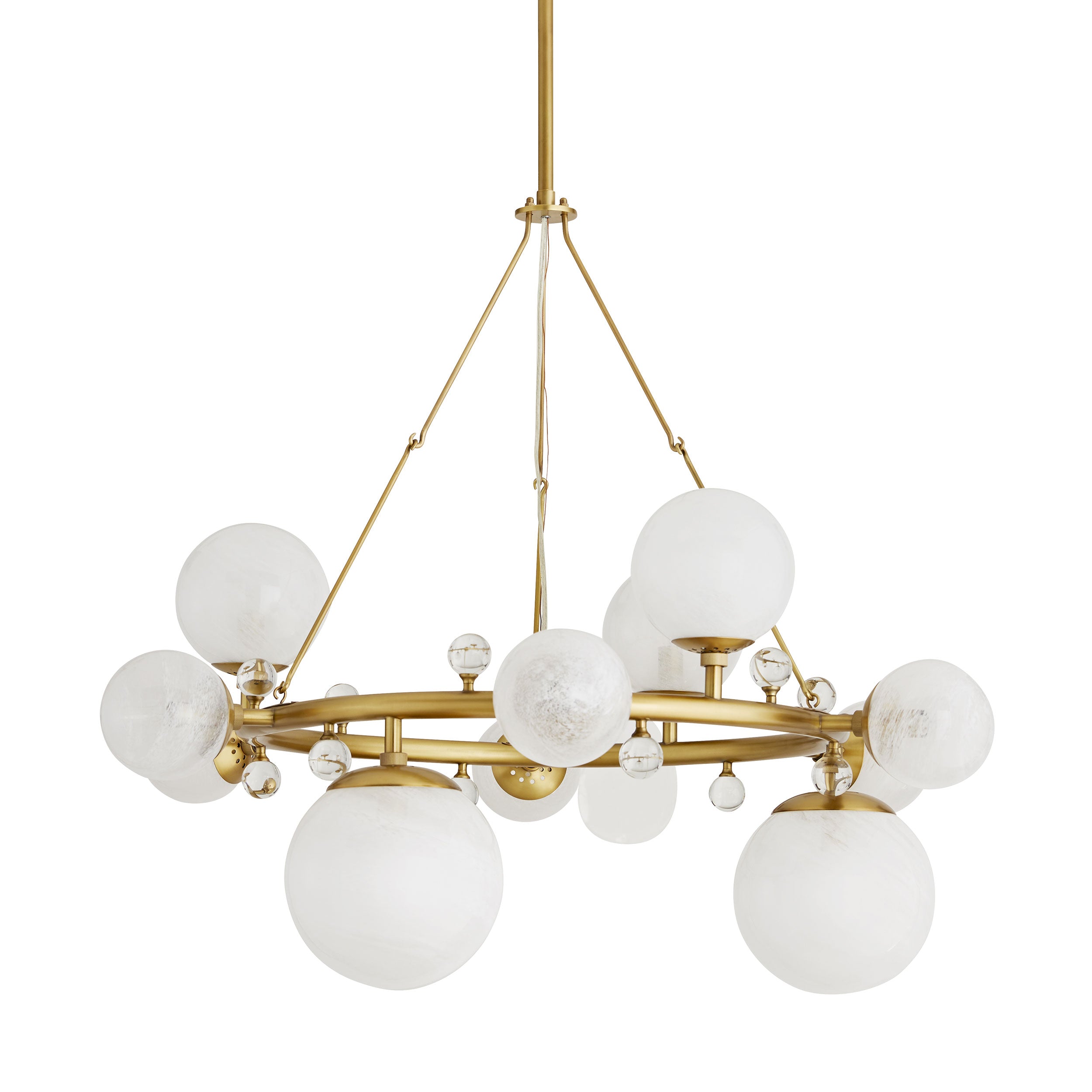
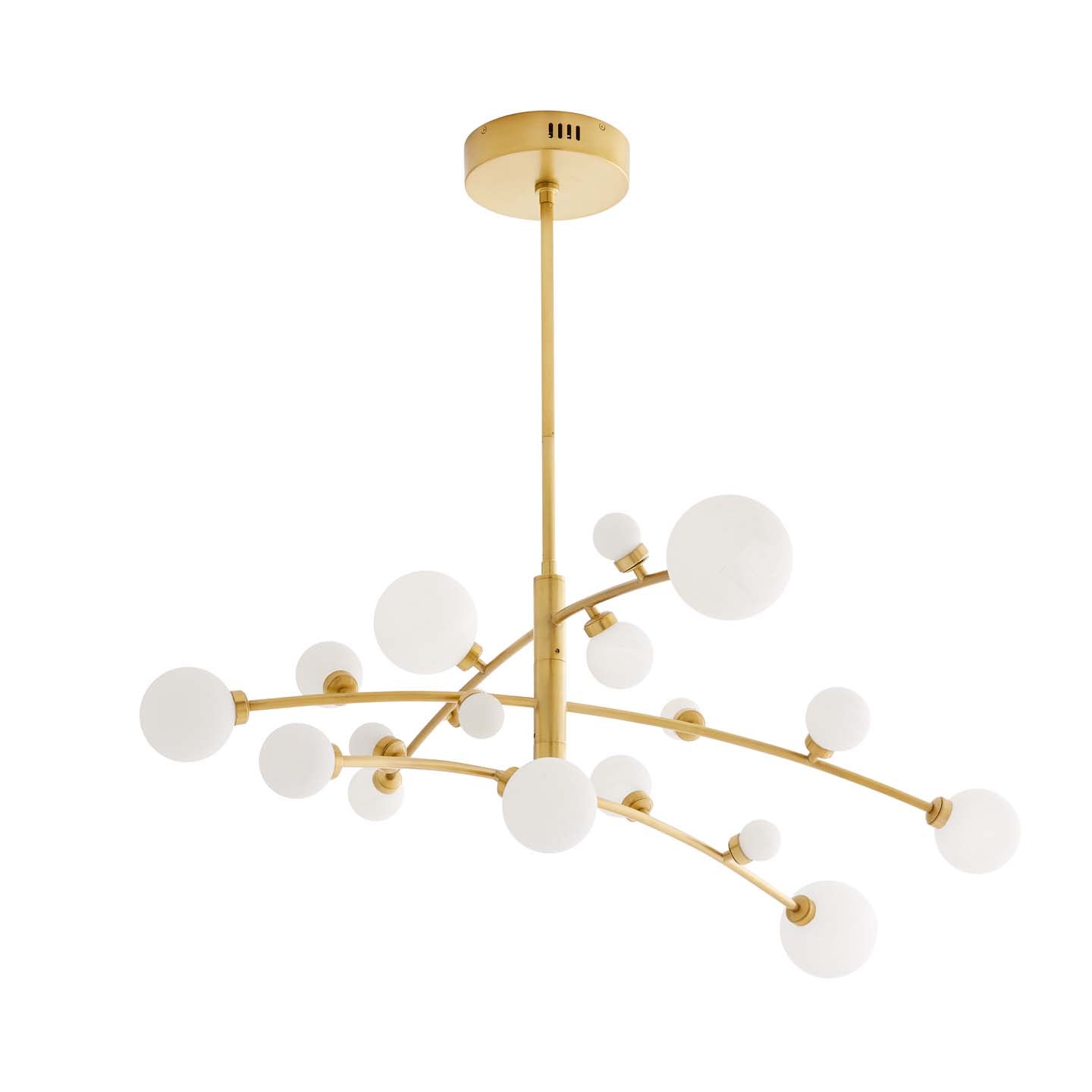
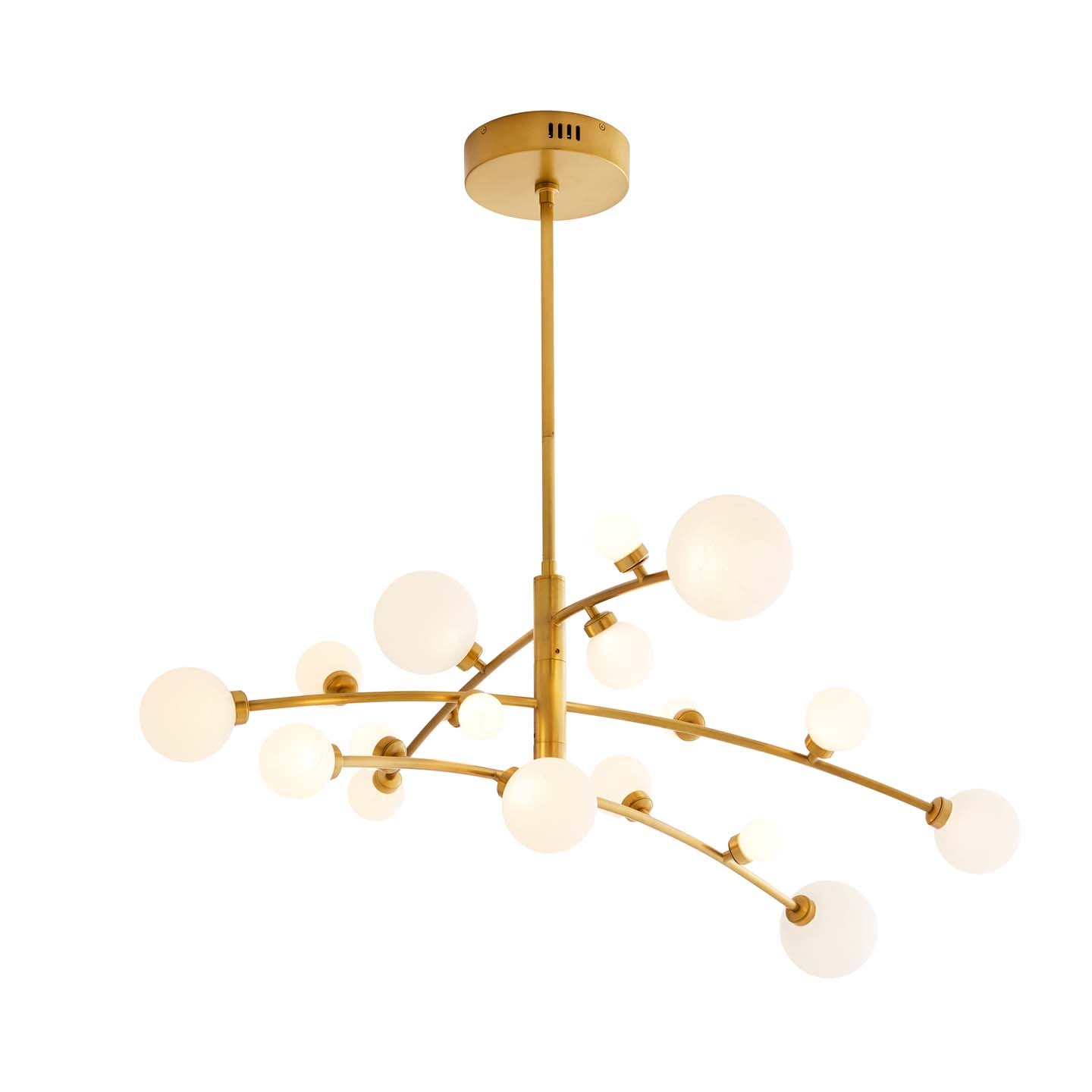
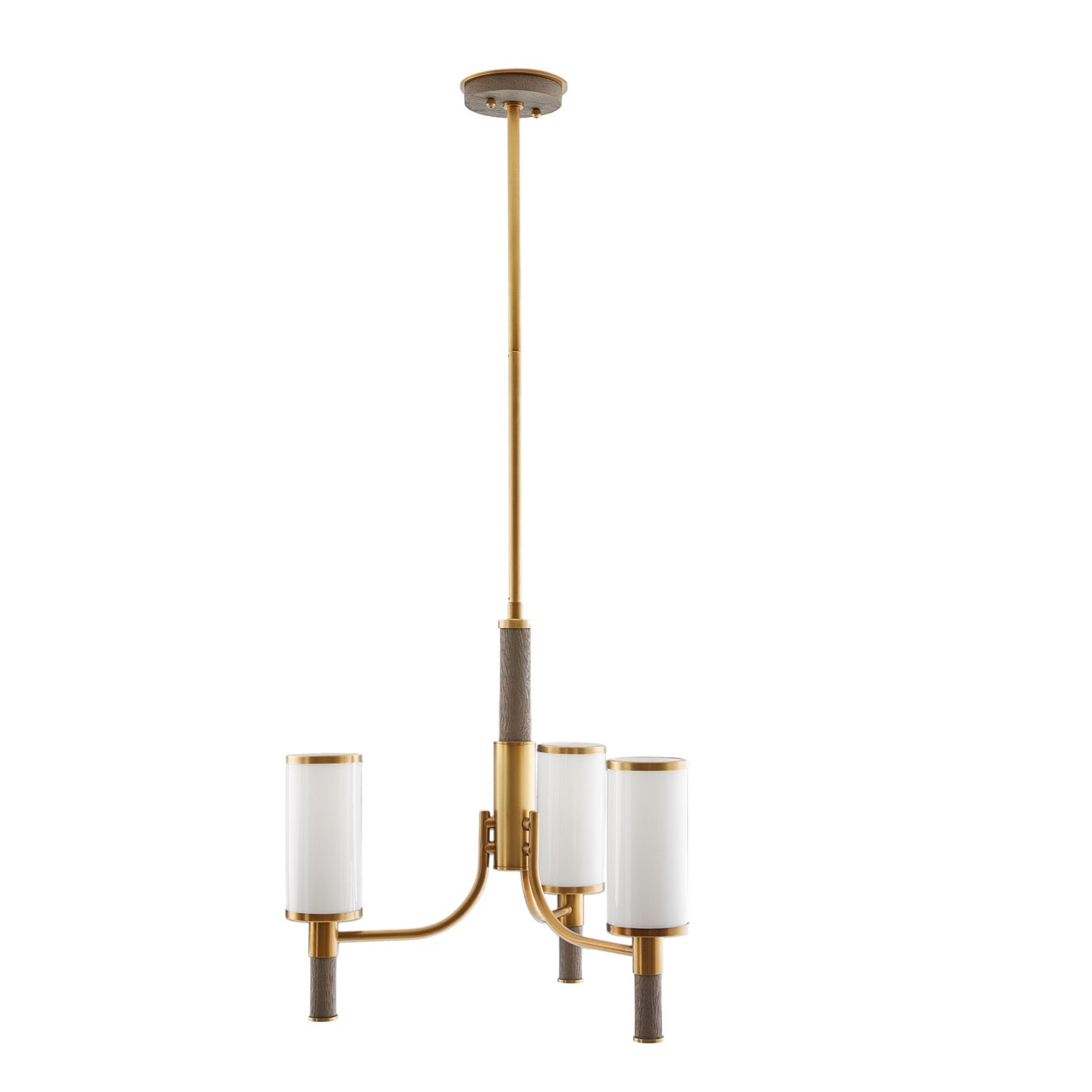
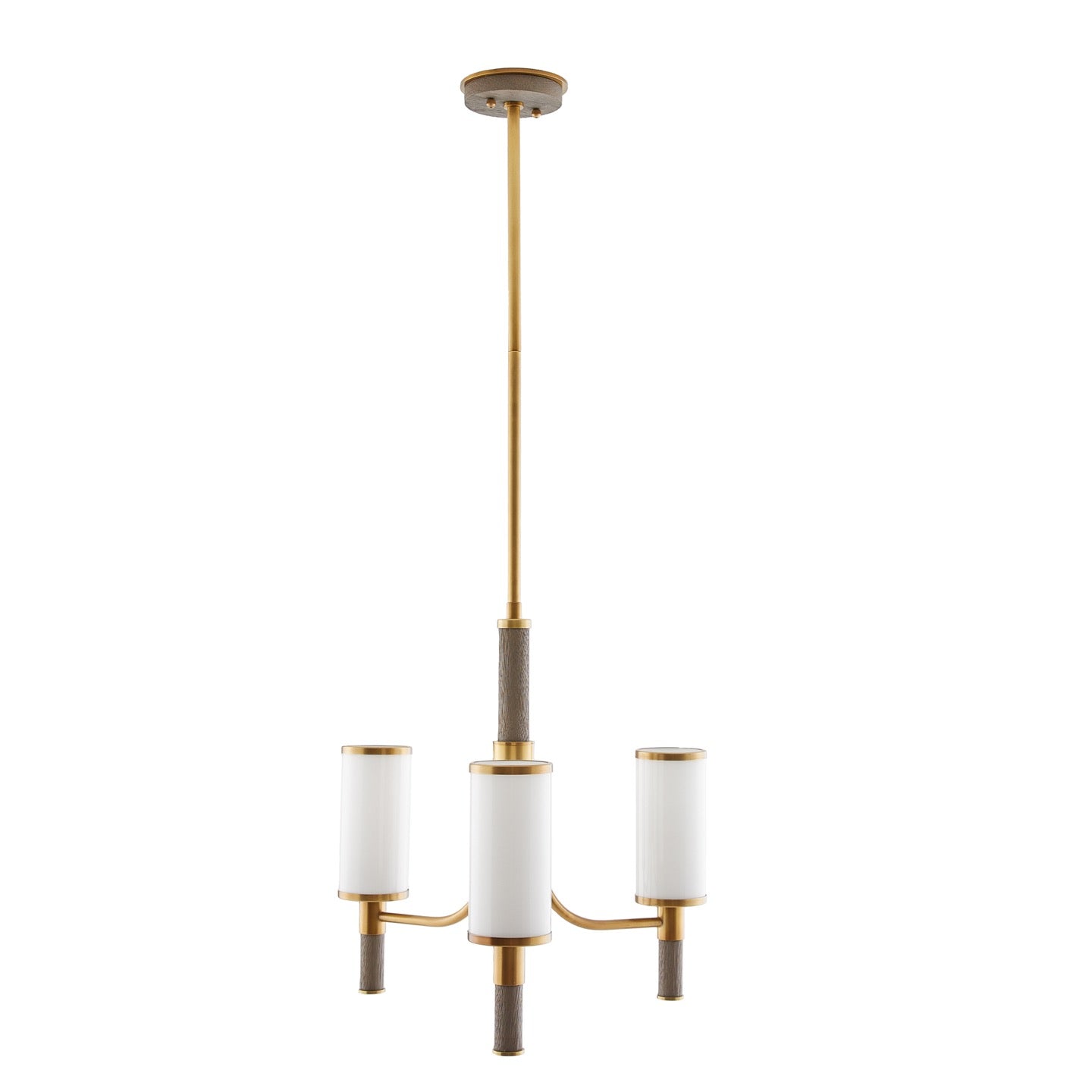
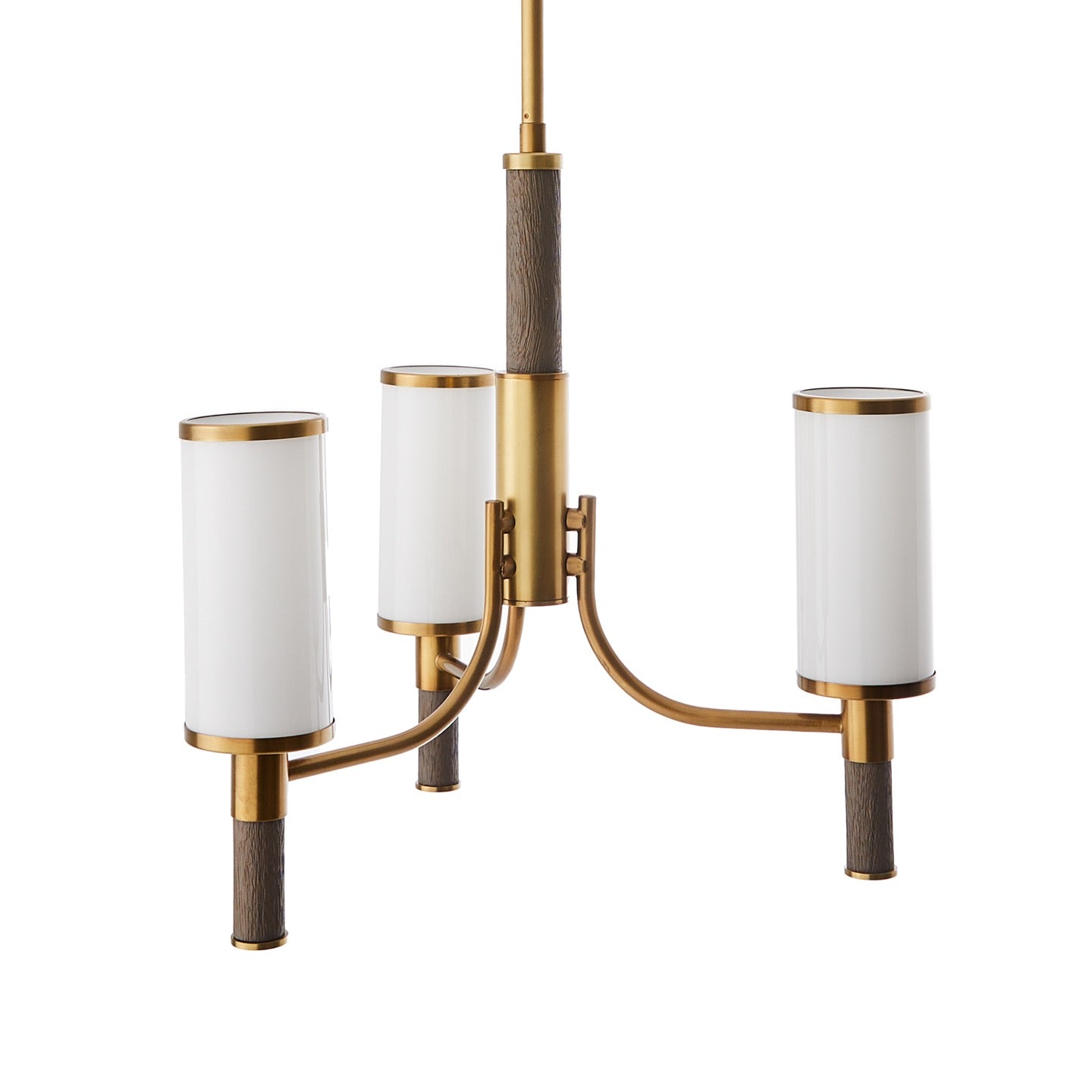
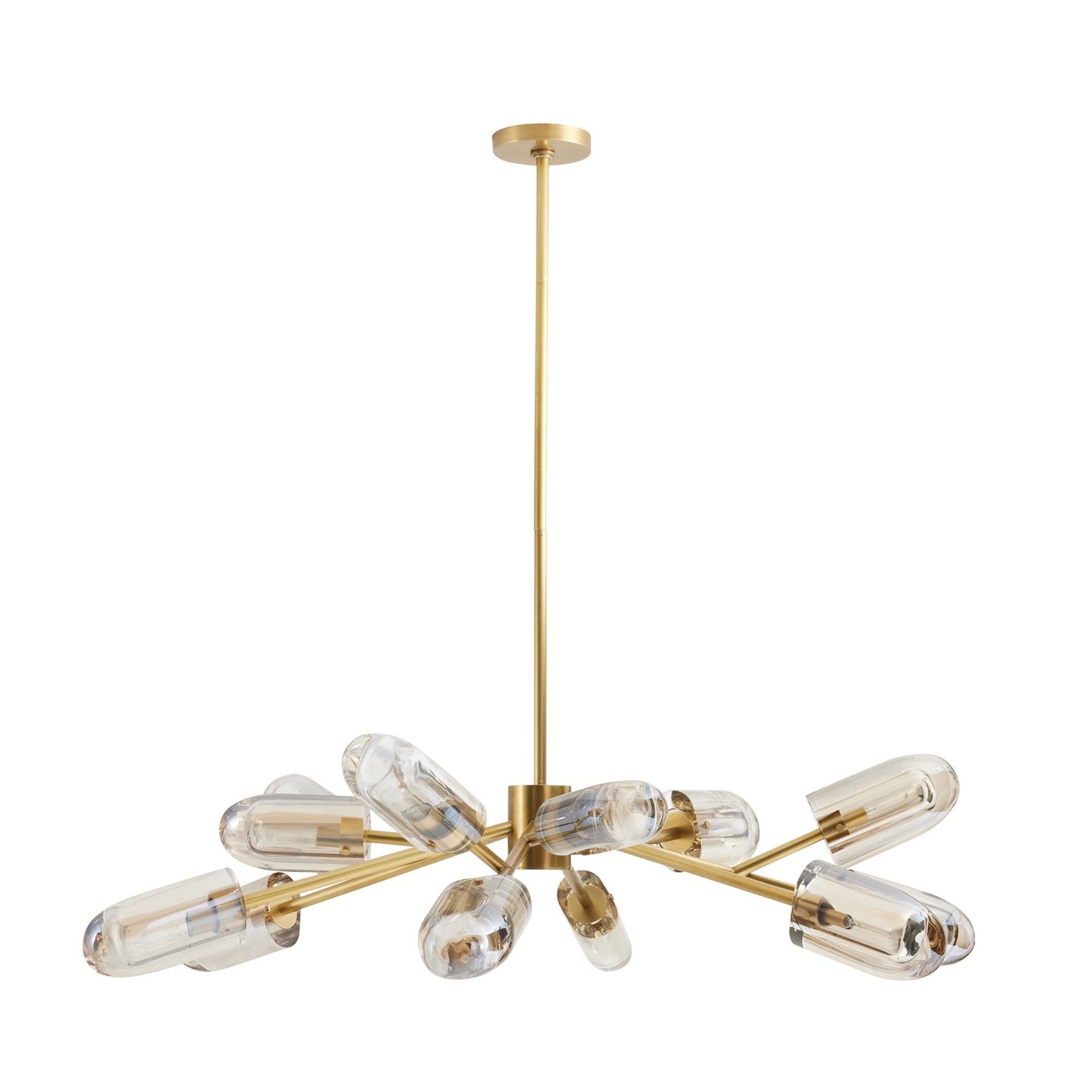
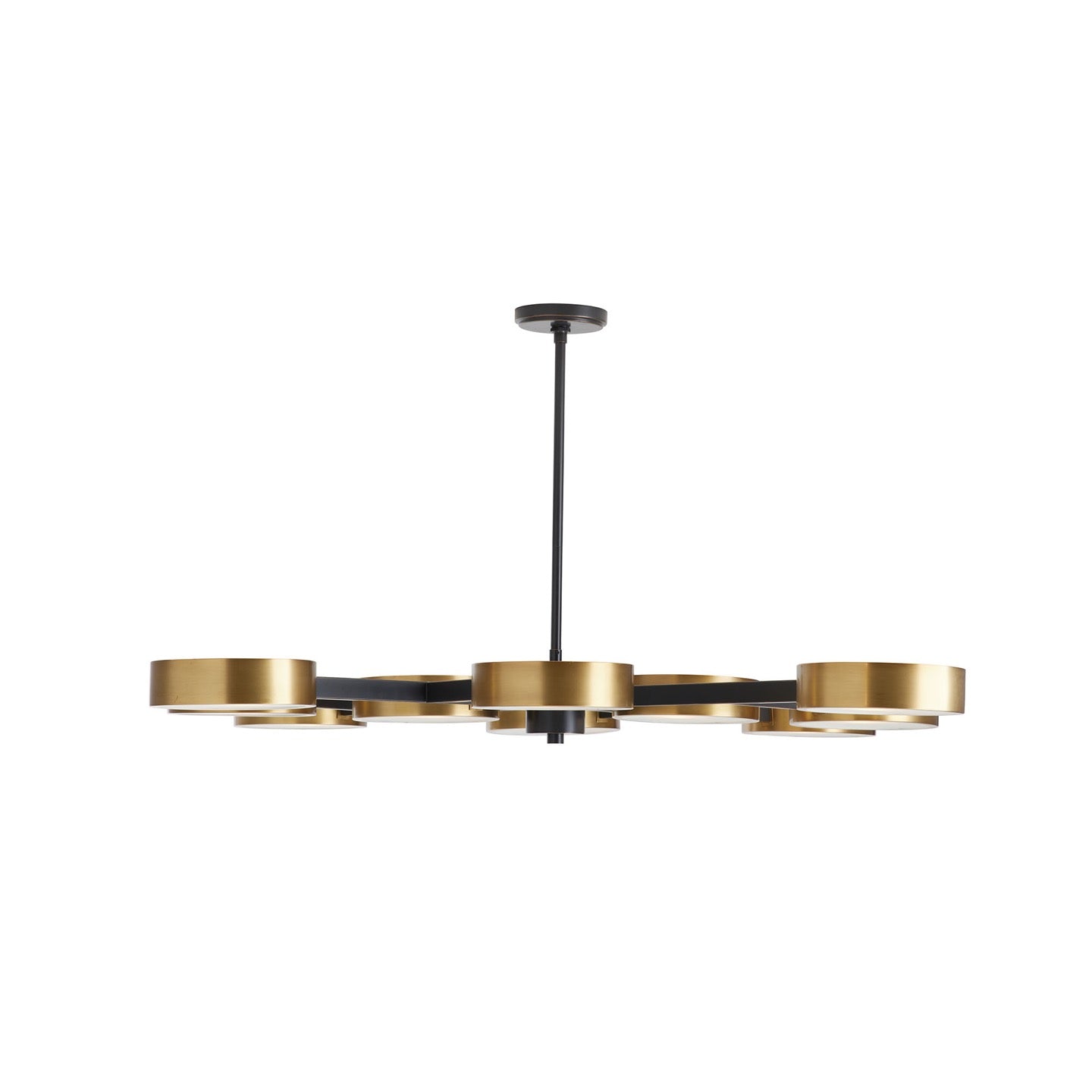
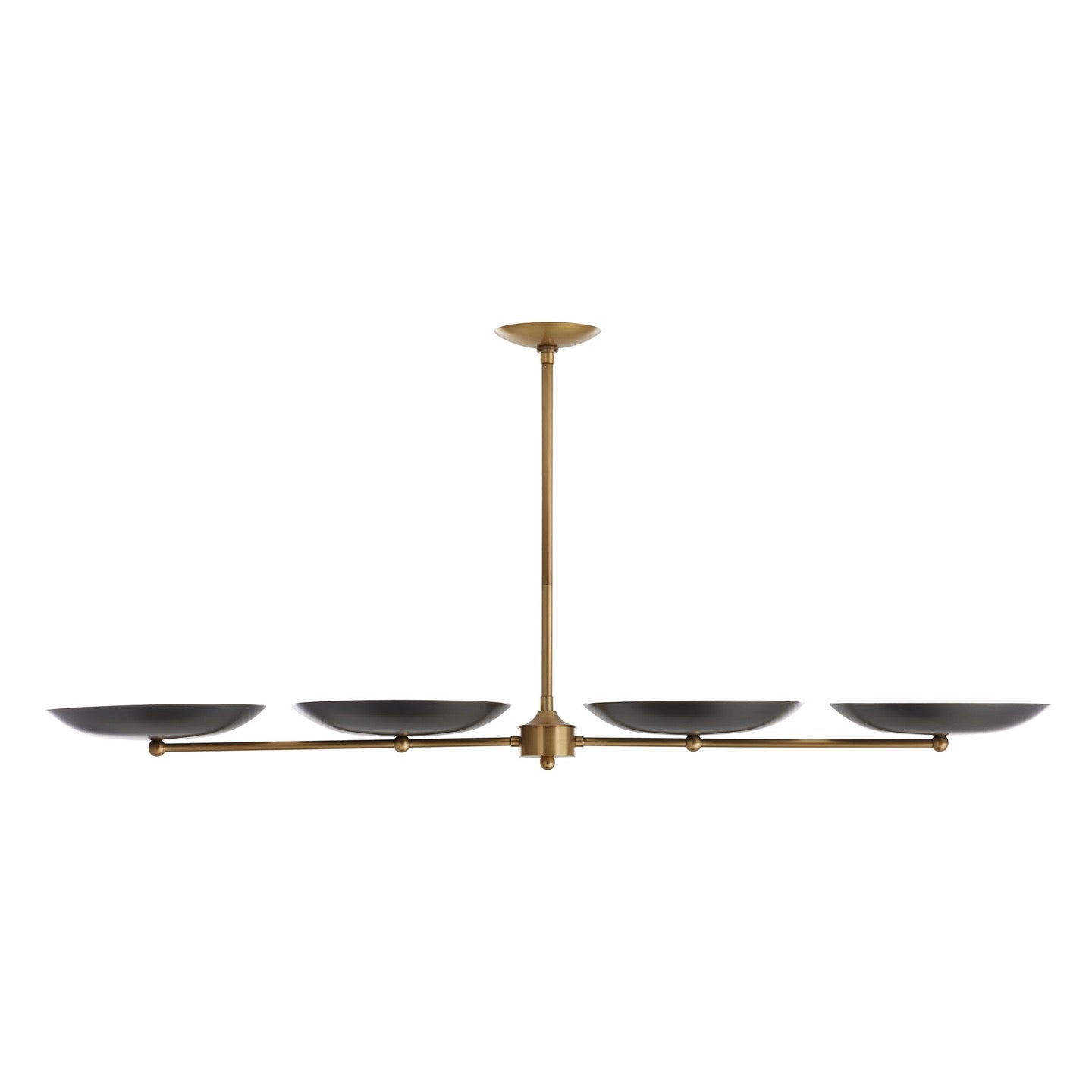
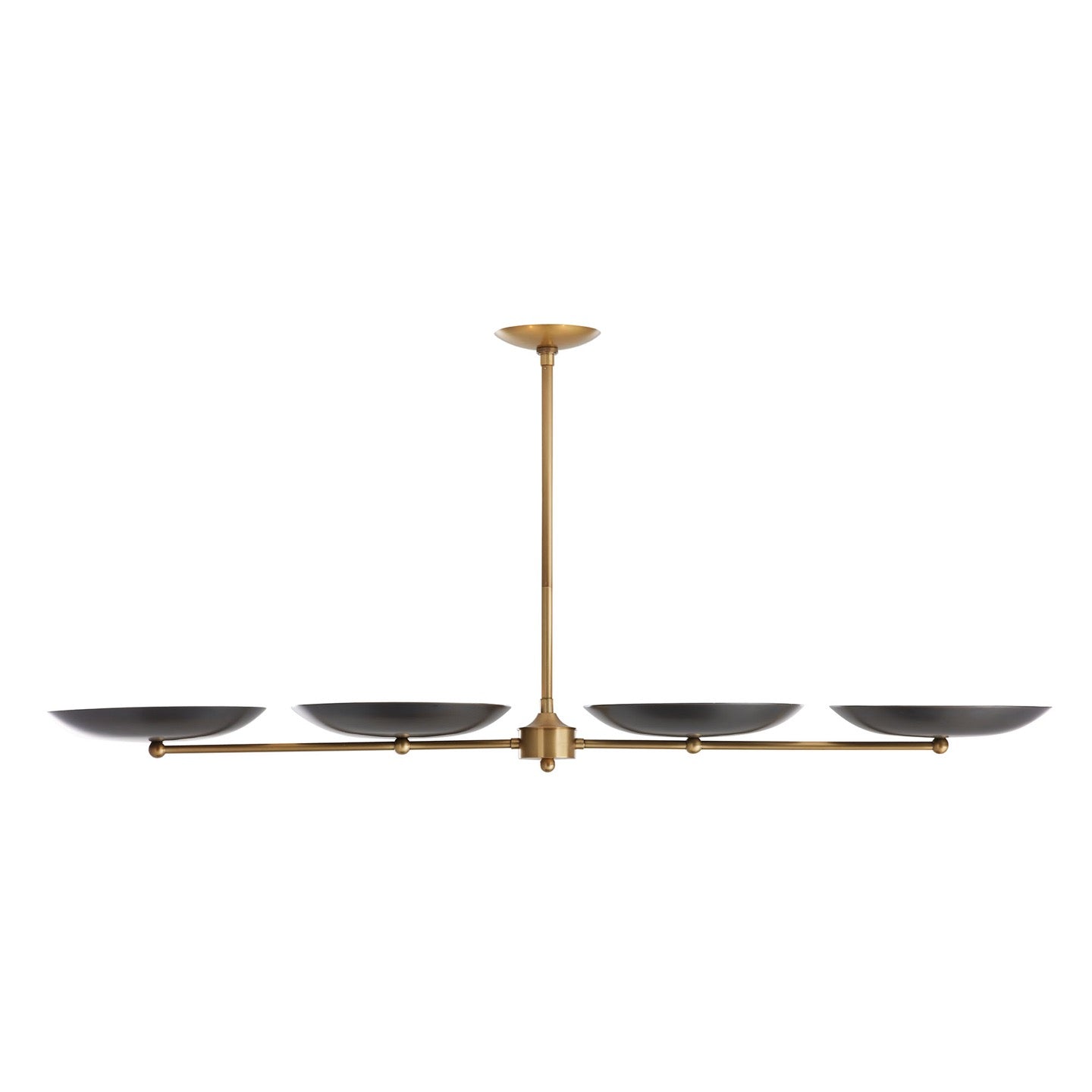
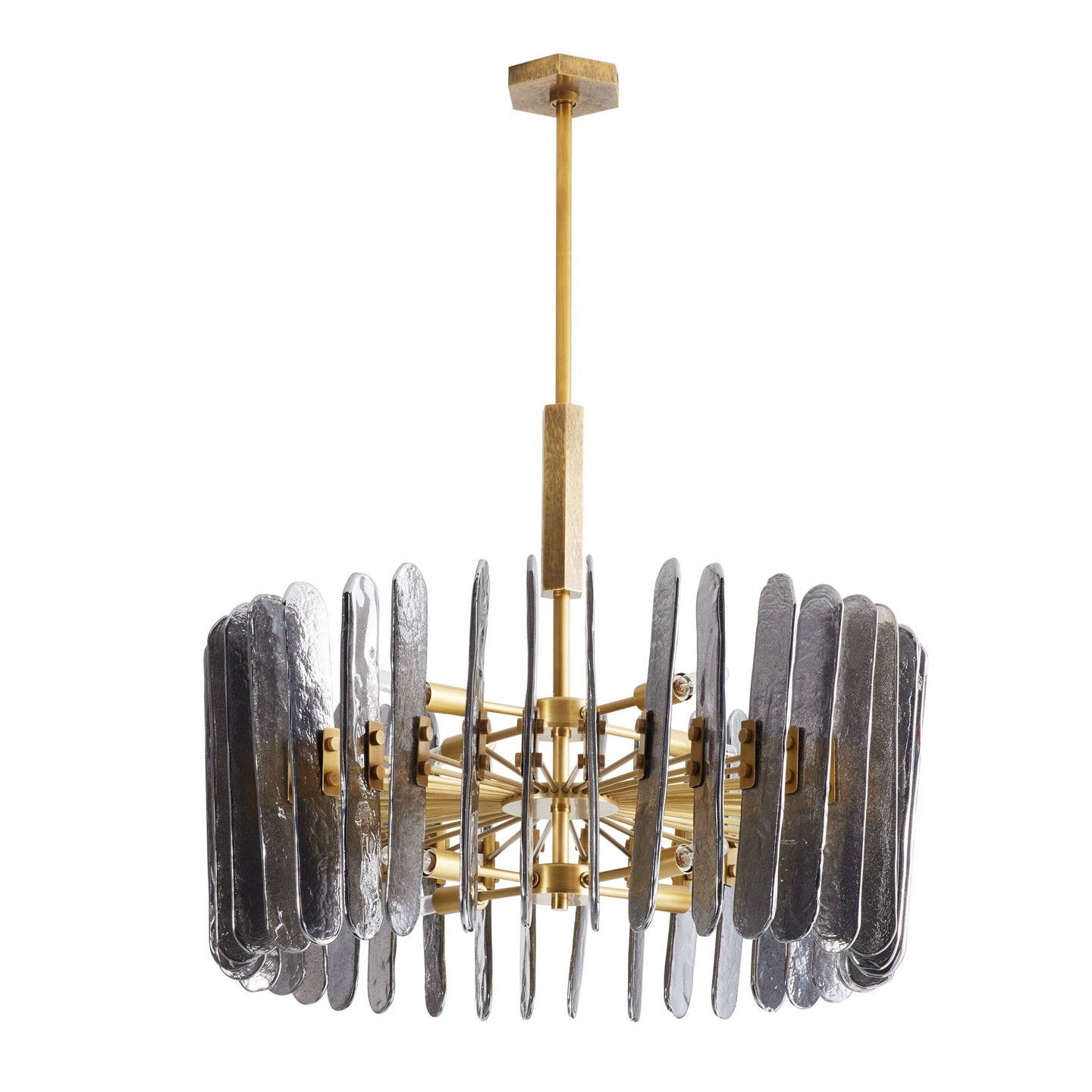
Linear designs follow long tables and islands, while round, tiered and radial compositions suit entries, living rooms and square dining settings.
Materials and craftsmanship
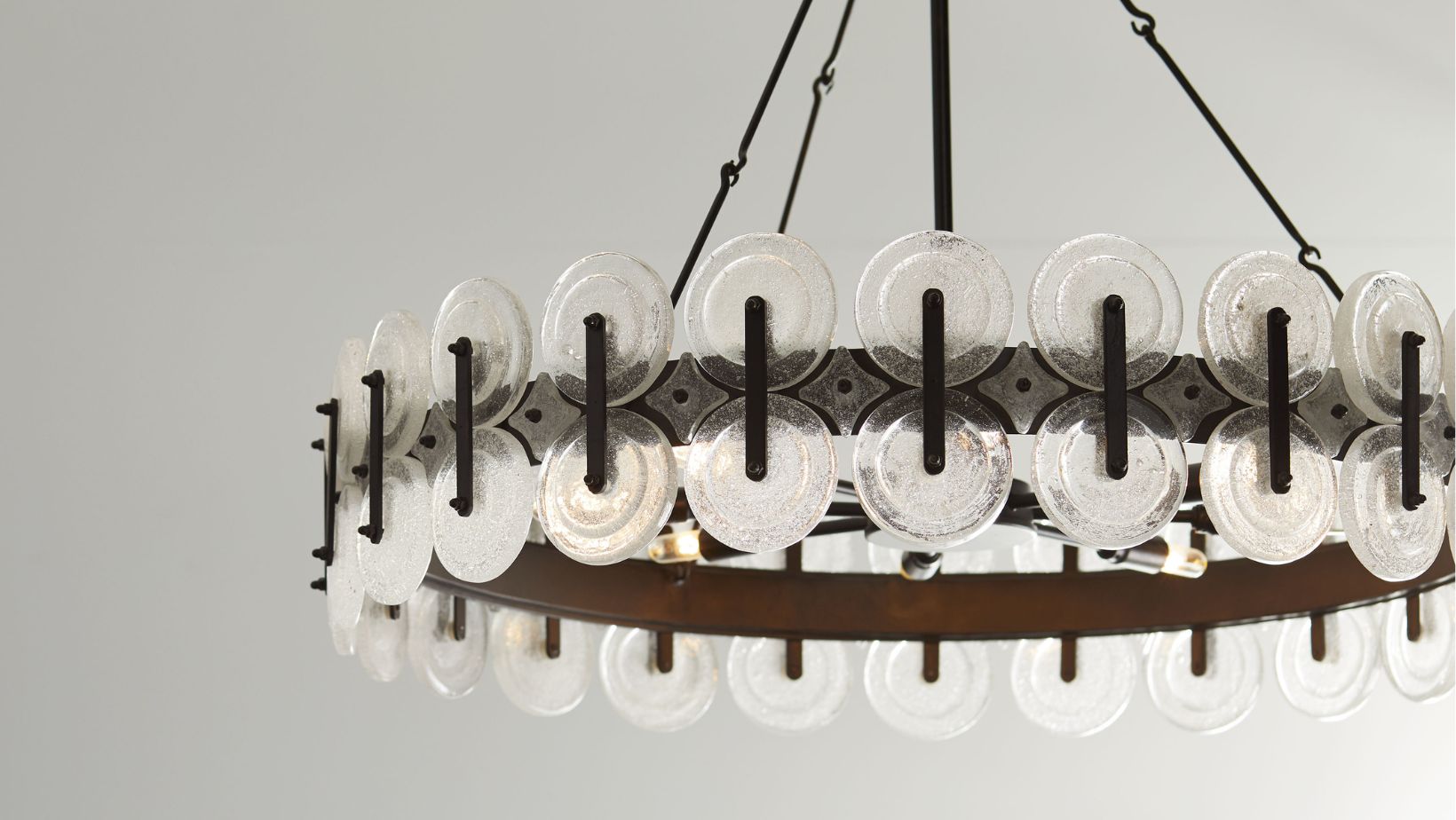
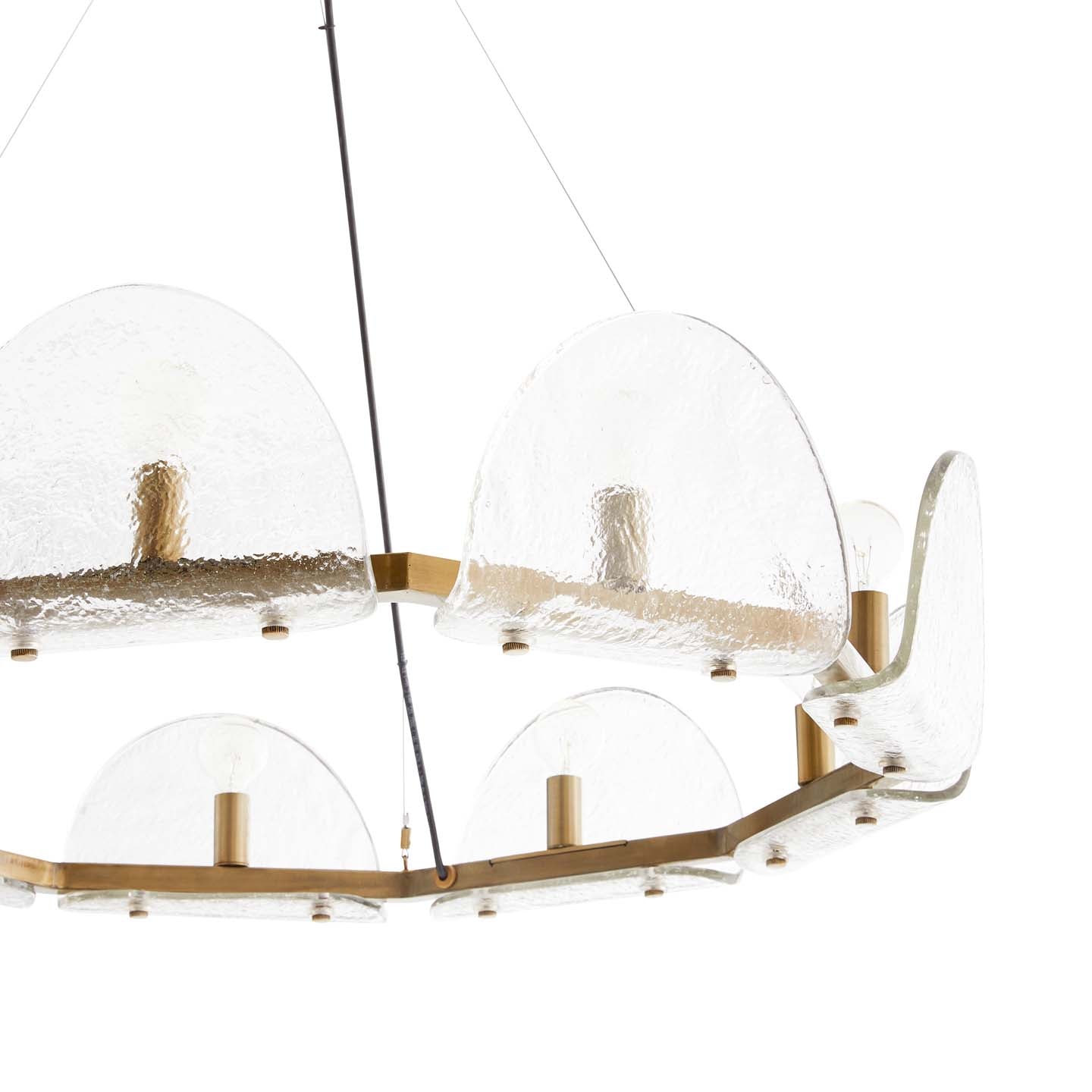
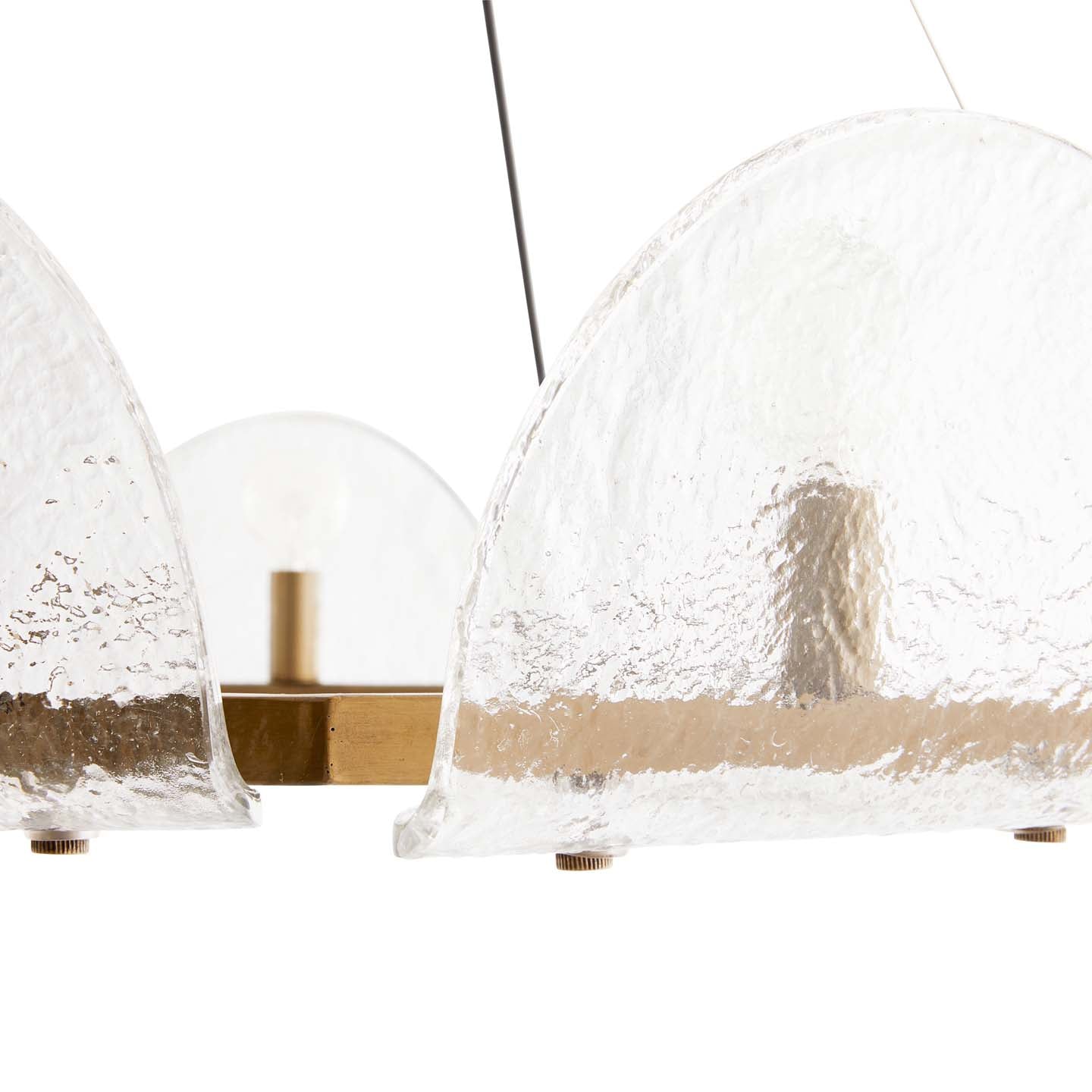
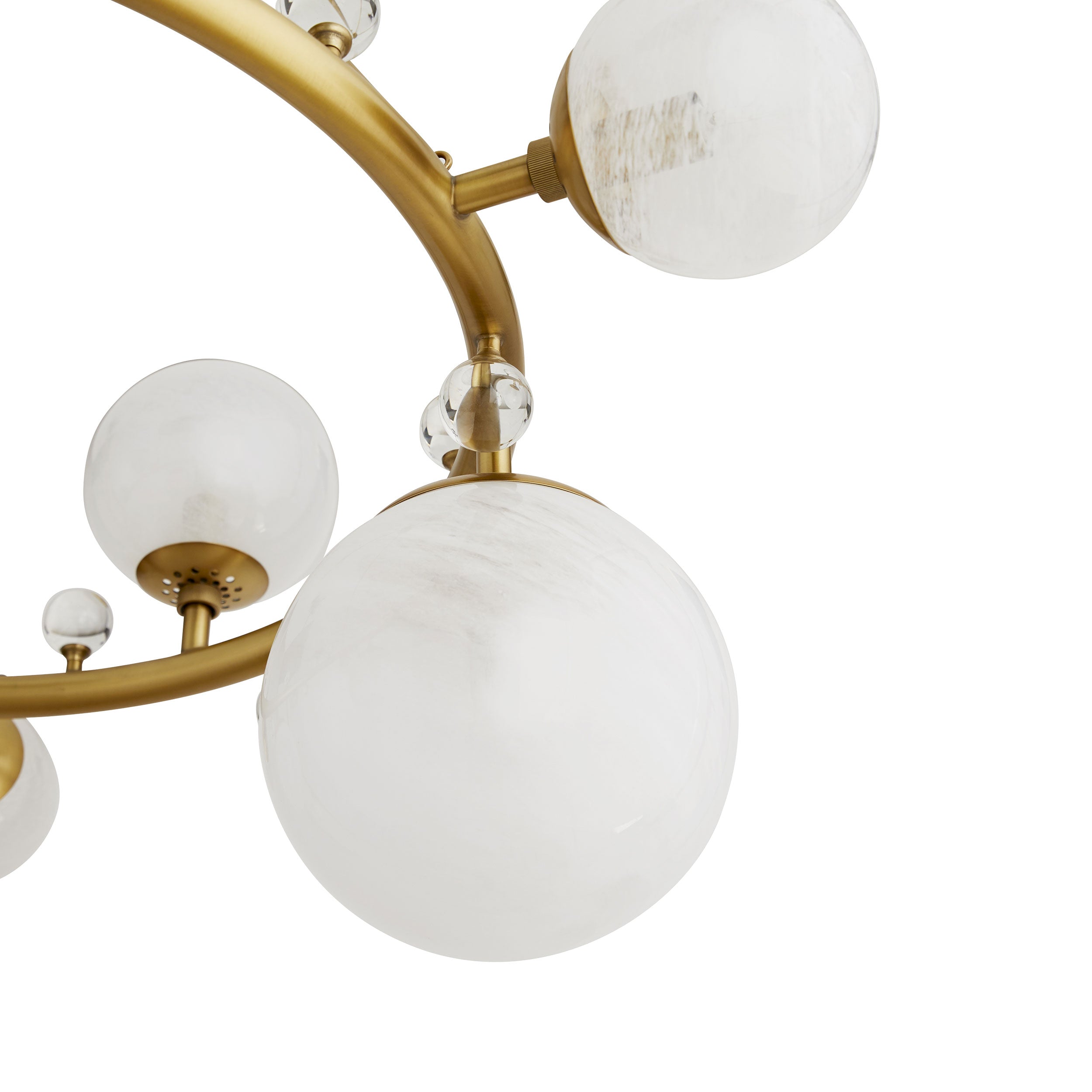
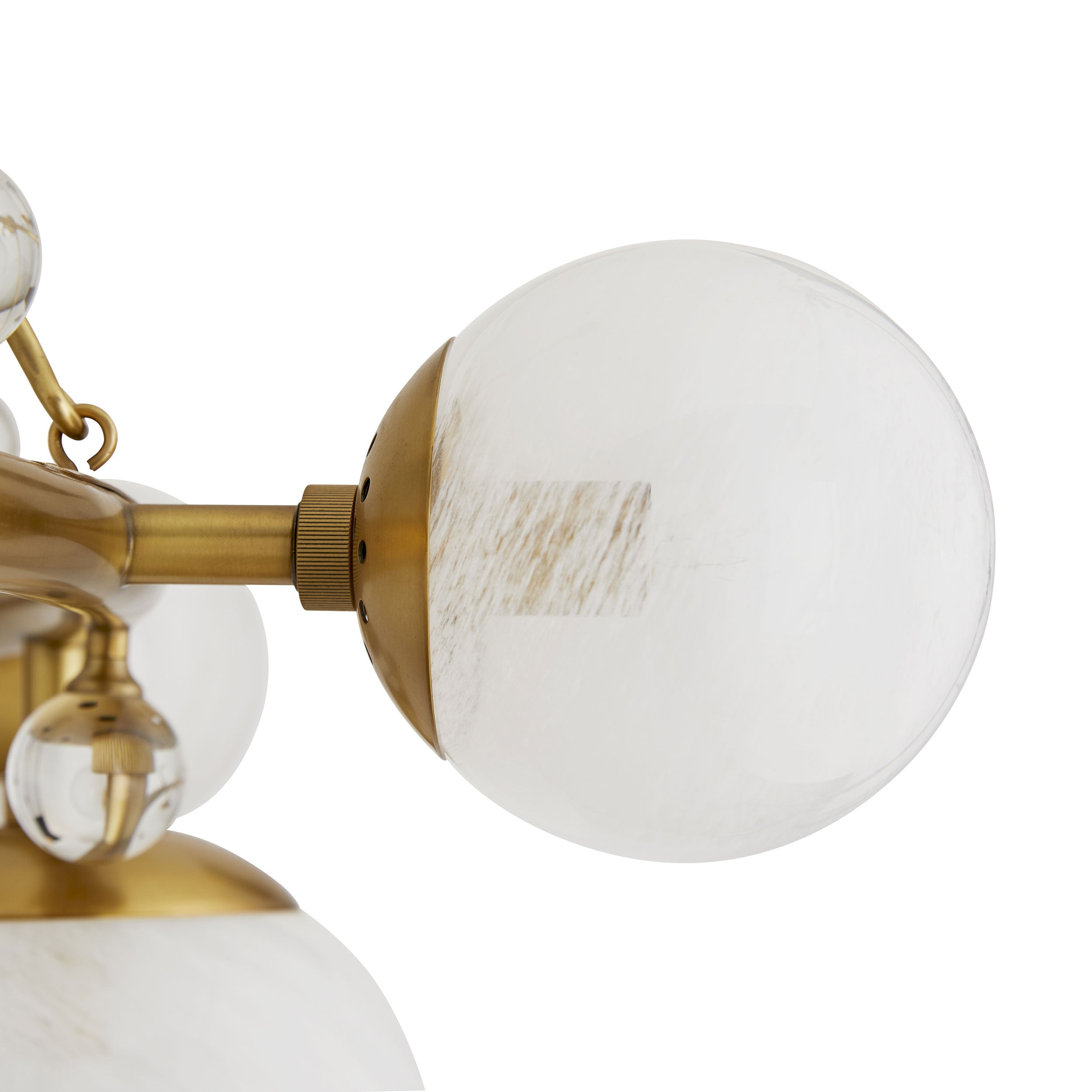
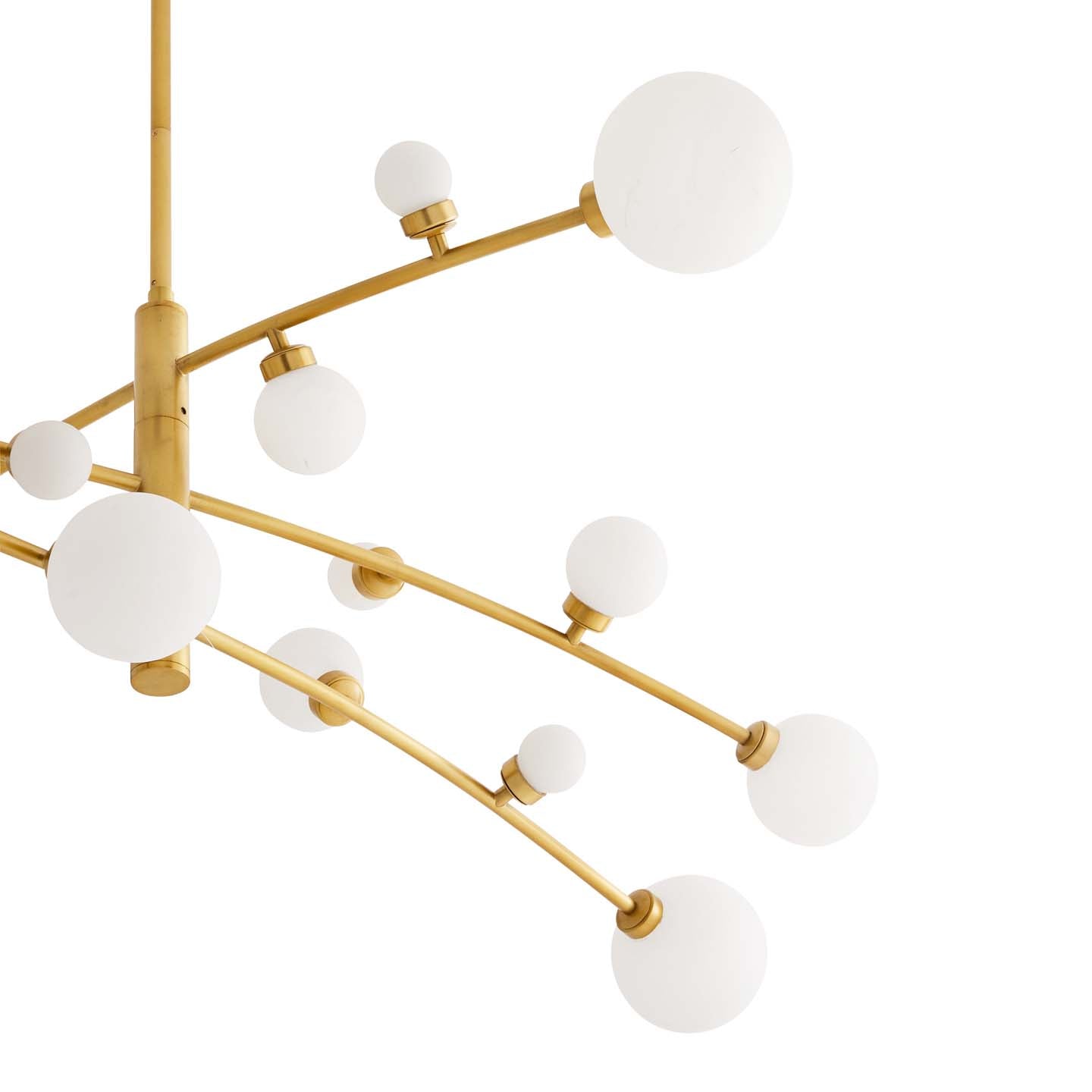
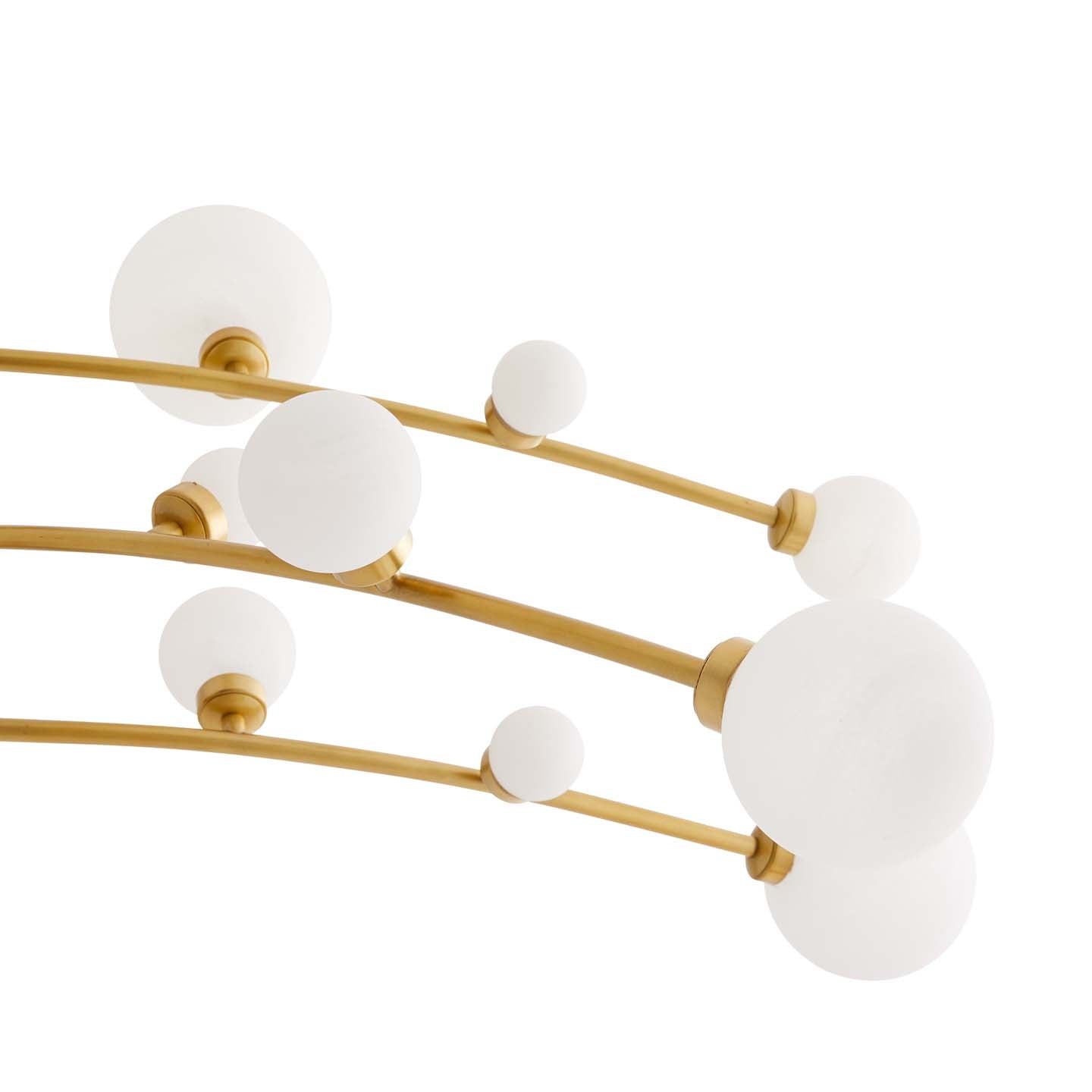
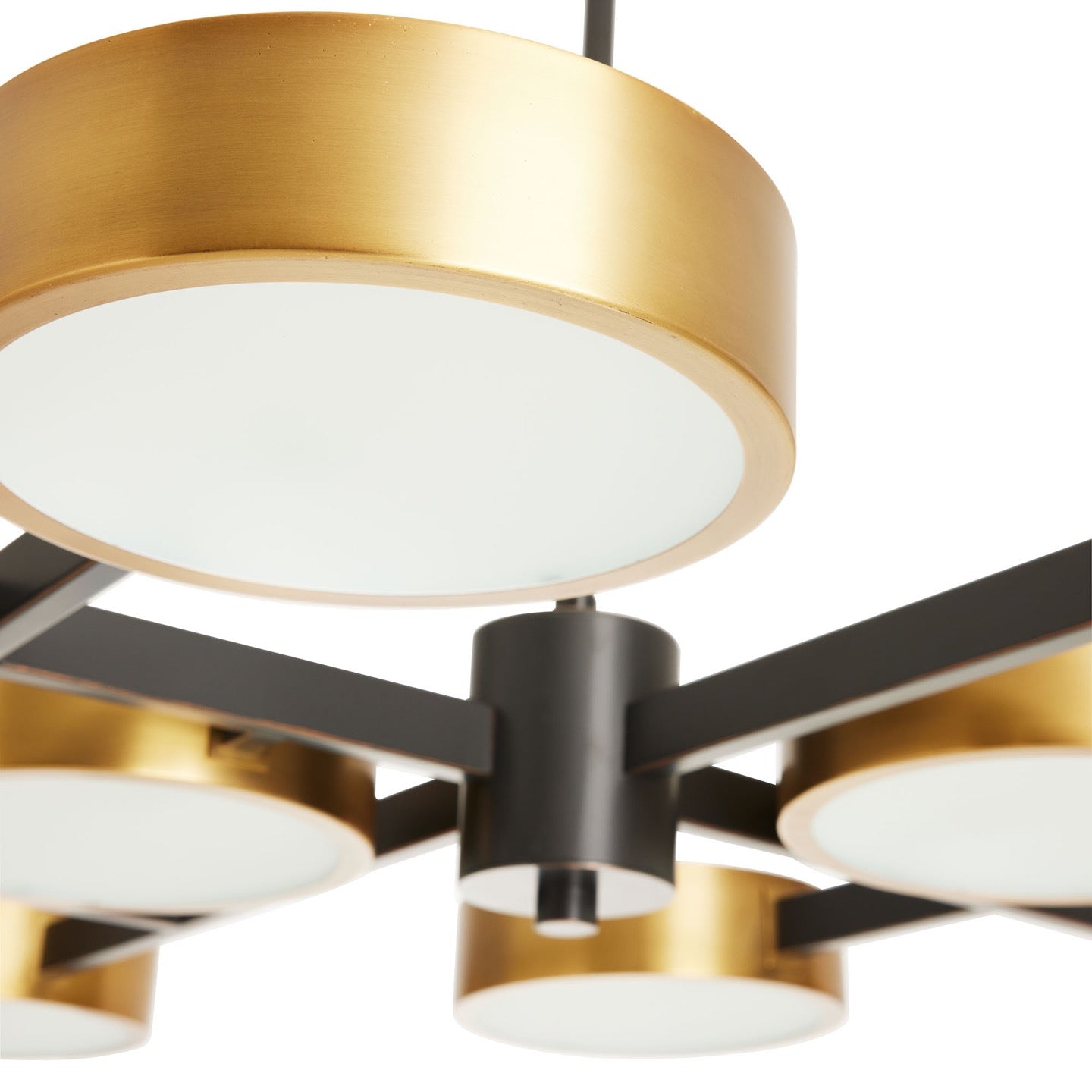
The collection draws on brass, iron, glass, ceramic and steel. Cast detailing adds further texture and individuality. Material, surface and making technique create a nuanced chandeliers collection with a strong sense of character. Confirm the relevant globe, dimming, certification and installation requirements for the selected fixture.
Scale, placement and everyday use
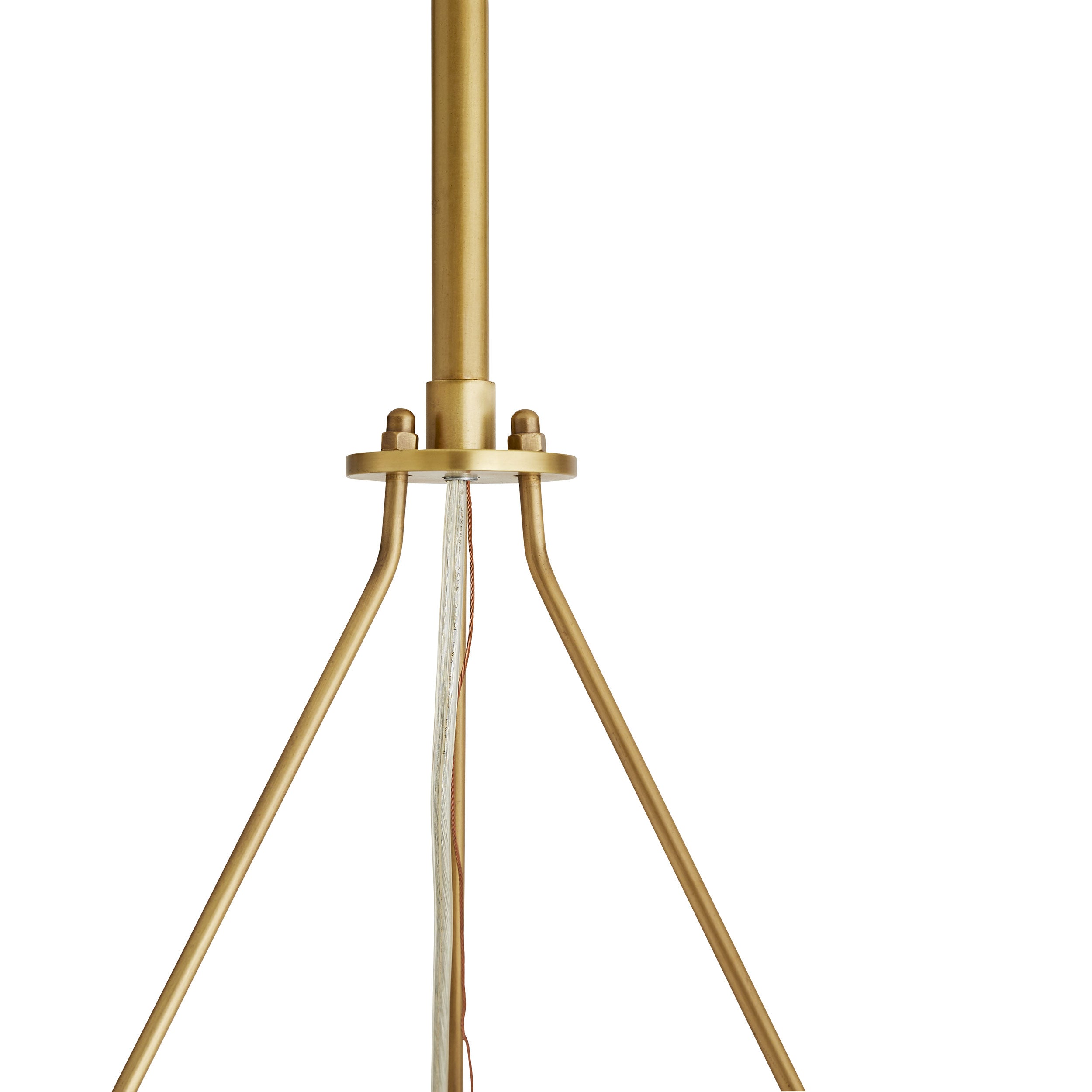
Consider the room width, ceiling height and furniture below. Linear chandeliers suit long dining tables and islands, while round or branching forms can centre a square room or entry. Check overall diameter, height, suspension range and weight before installation.
Frequently asked questions
How do I choose the right chandelier size?
Relate the fixture to the room volume, ceiling height and furniture beneath it. Map its diameter and lowest point so it feels substantial while maintaining comfortable clearance and balanced sightlines.
Can a chandelier be used without a dining table below it?
Yes. Chandeliers can define entries, stair voids and living spaces, provided the ceiling support, drop, clearance below and viewing angles are carefully considered.